Owner
- A repair sized to the defect when the roof around it is solid.
- Notes on any panels or supports to watch later.
- Photos of the repaired area from inside and on top.
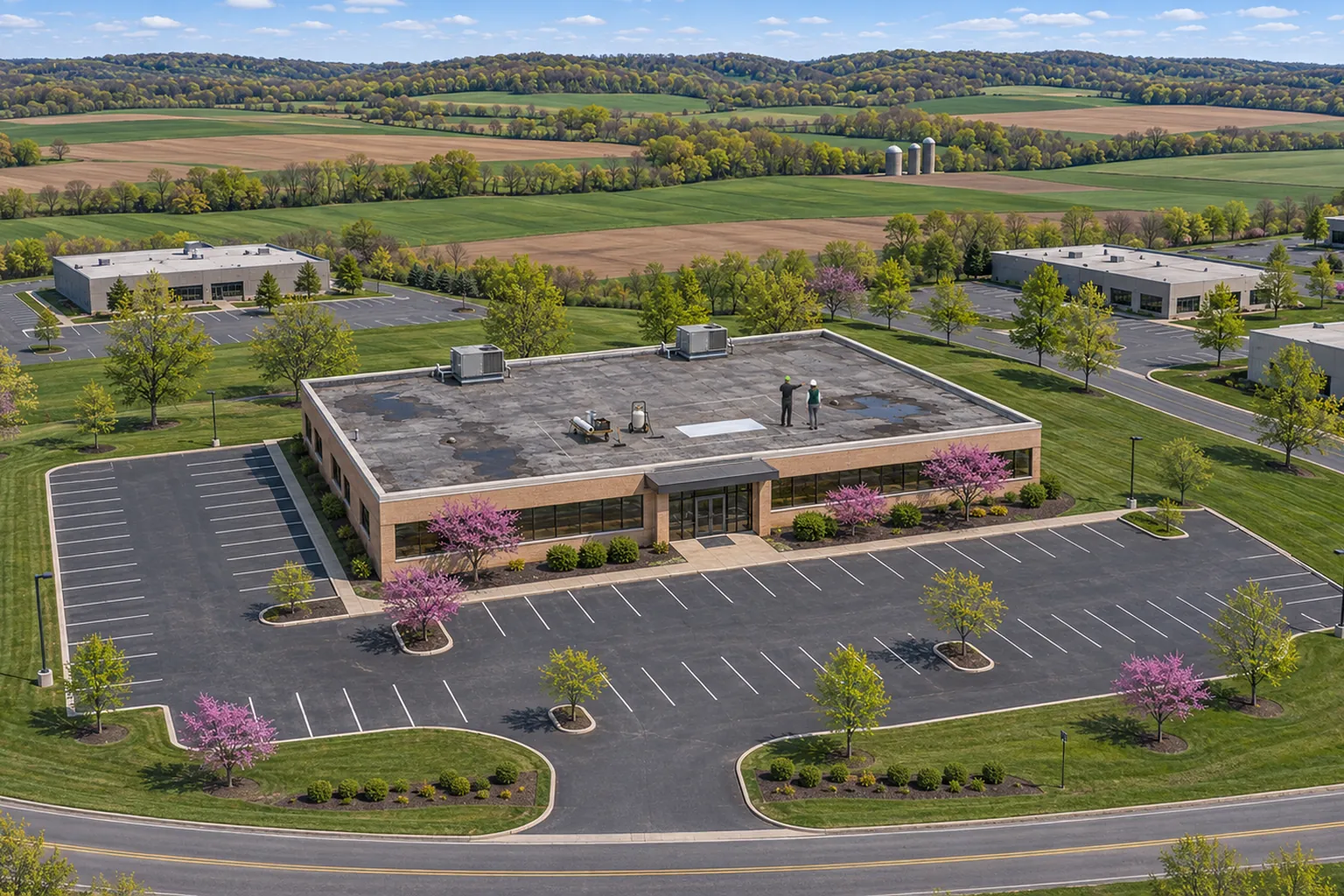
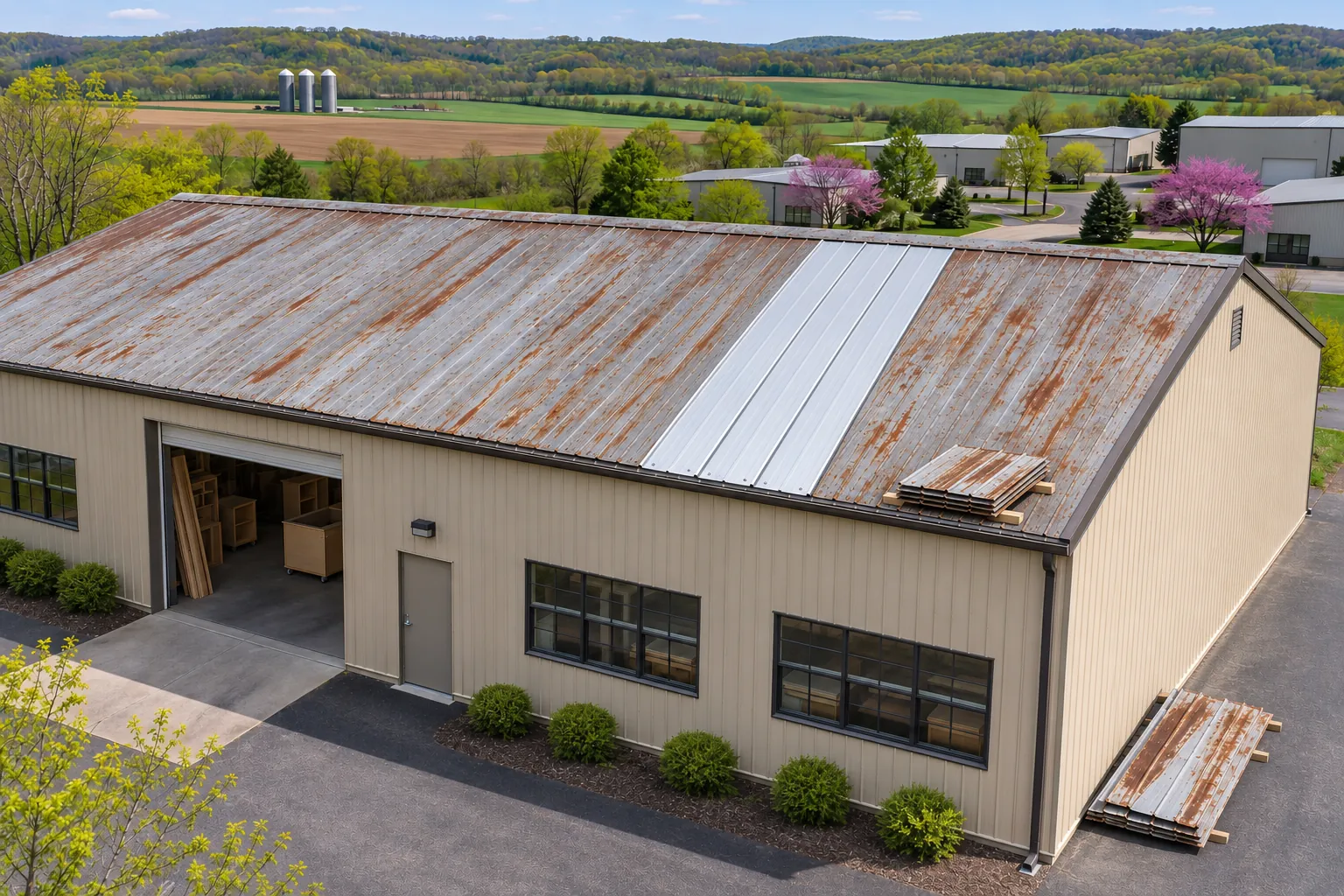
As a Mount Joy commercial roof repair contractor, we repair metal roofs on farm shops, equipment barns, and storage buildings, checking panel undersides before fixing each defect.
Mount Joy commercial roof repair often means a metal equipment building with one or two problem spots and plenty of solid roof around them.
An isolated defect, such as a torn panel, a lifted ridge cap, or a run of loose screws, can be repaired on its own when the surrounding metal and supports hold up. The check that decides it happens inside, looking at the panel underside and the purlins where we can reach them.
The repair then covers the whole defect, including attachment or flashing problems nearby that would reopen the same water path.
Farm and equipment buildings leak in a few familiar places. These pairs match what you see inside with the roof detail at fault.
Tractors or trucks parked in one bay pick up rust-colored spots after rain.
Screws over that bay have backed out, or their washers have cracked.
Light shows through one spot, often near the eave or a door track.
Wind, hail, or a strike from equipment has torn the panel, and the tear runs toward a lap or screw.
Water runs down a truss at the peak of the building.
The ridge cap has lifted or its closure strips have shifted, letting wind-driven rain in.
Drops fall from the whole underside of the roof on cool mornings.
Warm, damp air inside meets cold steel; a vapor or ventilation fix handles this, separate from any leak repair.
Repairing an isolated defect in full keeps the rest of a solid metal roof working and the equipment under it dry.
On an equipment building, the decision to repair one spot comes from what surrounds it.
| Check | What We Look For | Why |
|---|---|---|
| Panel underside | Rust, holes, and water trails near the defect | Shows how far the damage reaches |
| Neighboring screws | Backed-out screws and cracked washers | Loose screws reopen the same path |
| Ridge and eave flashing | Lifted caps and shifted closures | Wind-driven rain enters at the edges |
| Purlins and supports | Rust or bending where panels attach | Decides whether a local repair holds |
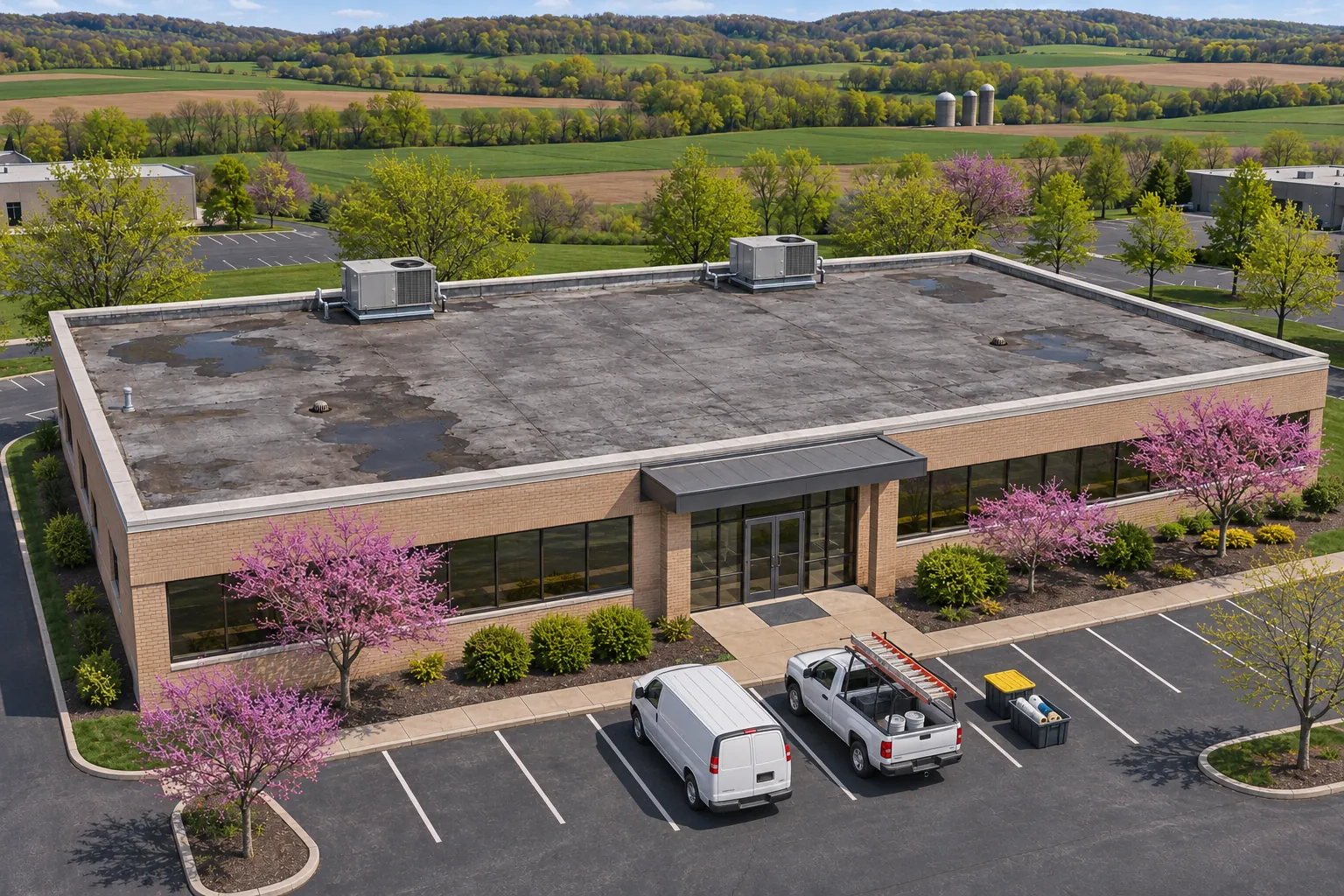
Send the address and which bay leaks. We will check the panels from inside and on top and price the repair for that defect.
Schedule Your Free InspectionAn equipment building repair starts inside and finishes on the panels, so each step sits in the lane where it happens.
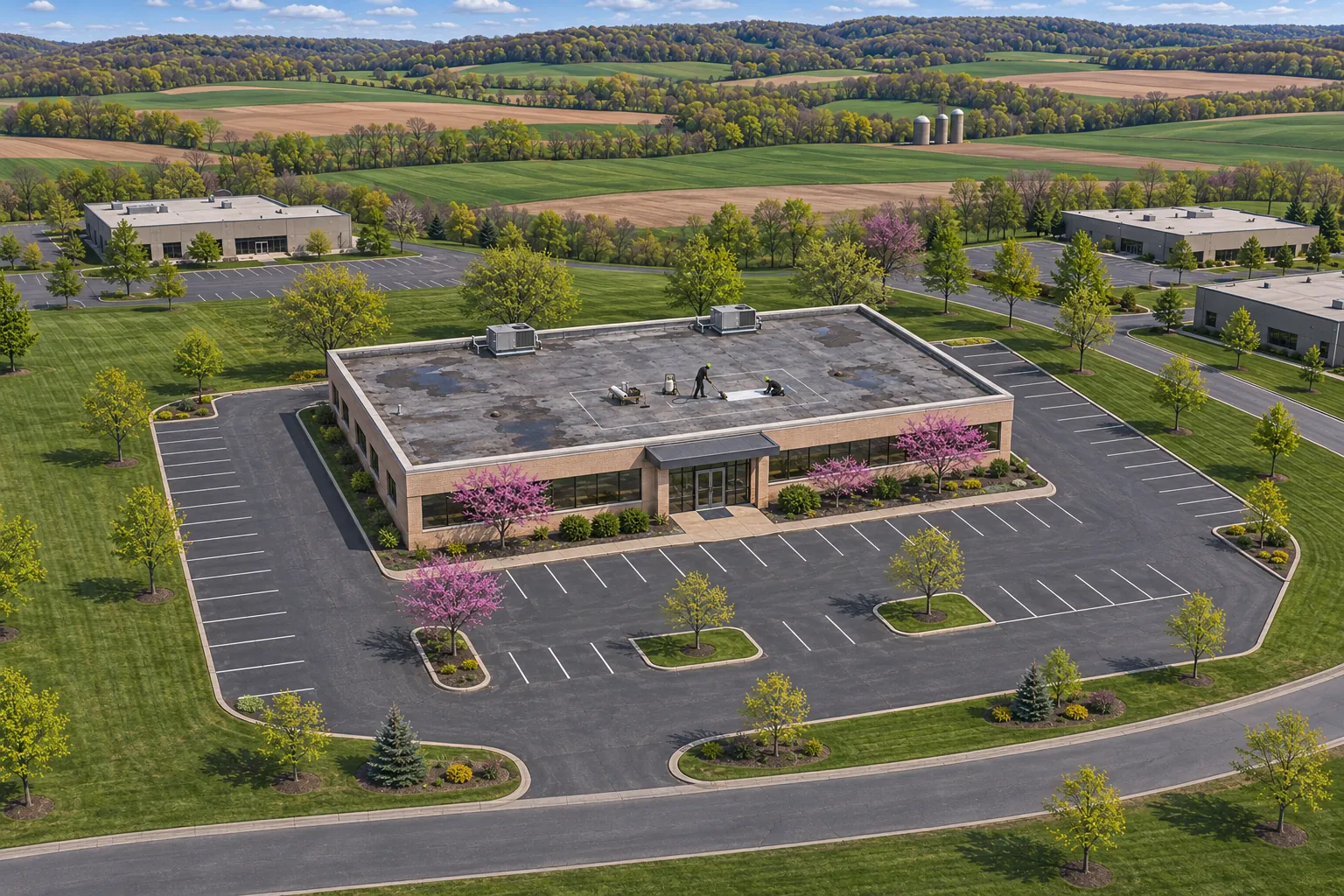
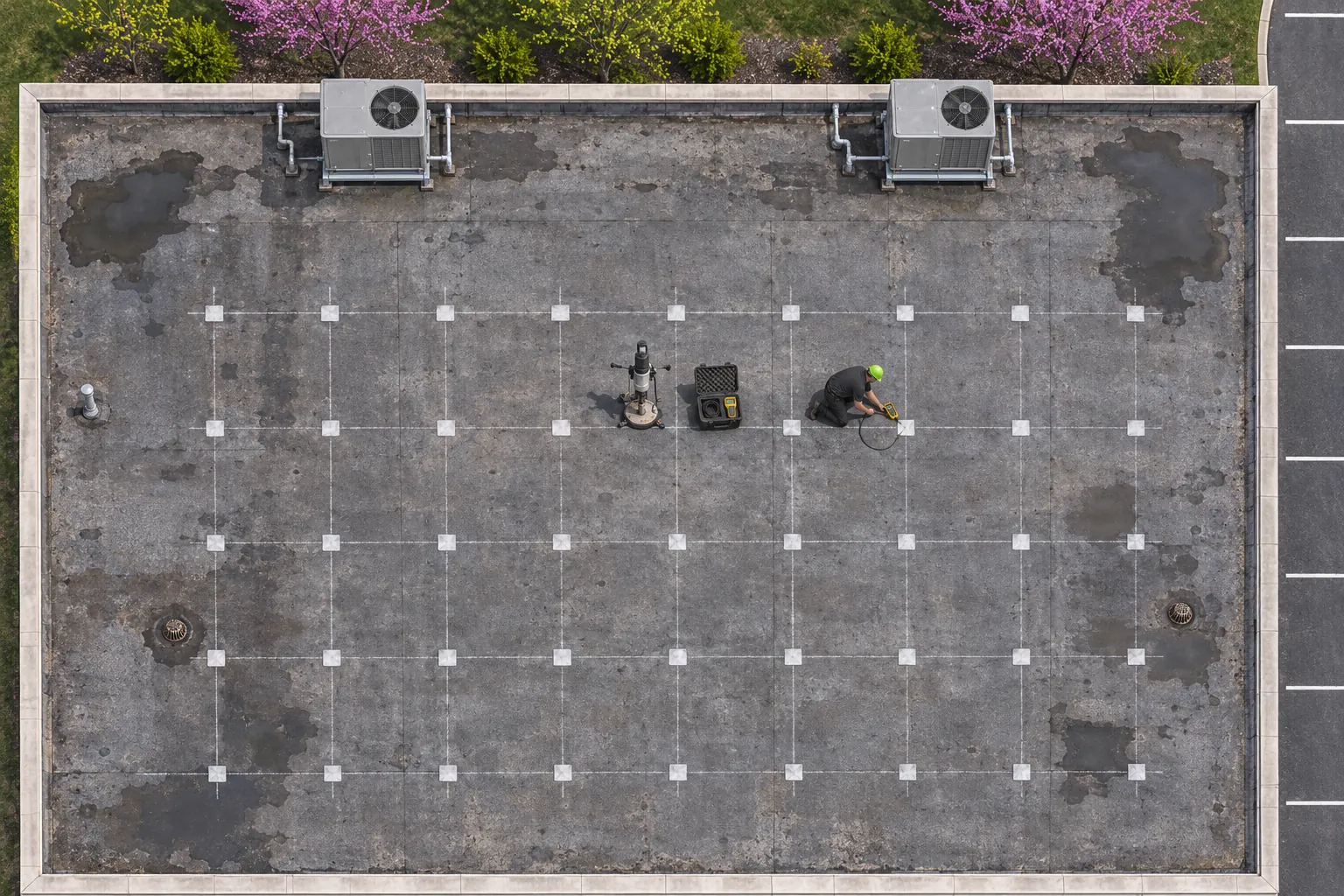
Inside the building we look at the panel underside, purlins, and water trails around the leak, from a ladder or lift.
On top we test neighboring screws, check laps and ridge flashing, and confirm the damage stays in one area.
Vehicles and supplies under the repair area get moved for the time the panels are open, timed around field work.
The torn panel, loose run, or lifted flashing is repaired along with any attachment fault nearby, then photographed.
Our coverage reaches Mount Joy and four other towns around Lancaster. Farther out? Call us or send us a message.
Warehouse leaks traced along the deck to their entry.
Metal roofs with rust hidden under panel overlaps.
Production floors protected before the roof is opened.
Snowmelt routes, iced outlets, and freeze-thaw seams.
Documenting leaks, farm buildings, and condensation questions from Mount Joy owners.
Record where the water returns, the weather at the time, and any equipment running nearby. We compare those notes with the earlier repair boundary and photos. That evidence separates water using the original entry path from a separate defect or moisture source elsewhere in the building.
Yes, when the panels and supports around it are solid. We check the underside and neighboring screws first, then repair the tear and any loose attachment along with it.
Condensation drips across a wide area on cool mornings, often with no rain. A leak shows up after rain or snowmelt in one area. Notes on timing and weather usually settle it.
We try to. Tell us when the building is busiest, and we will plan the repair for a quieter stretch when equipment can move out of the work area.
We plan covers and timing around whatever is stored below, and keep openings short so the space stays usable during the repair.
Tell us which bay leaks and what is parked under it. We will check the panels from both sides and price the repair for that spot.