Owner
- Repairs planned so production keeps running around each opening.
- Drain repairs aimed at the outlet or pipe that leaks.
- Photos showing each area covered and each detail repaired.

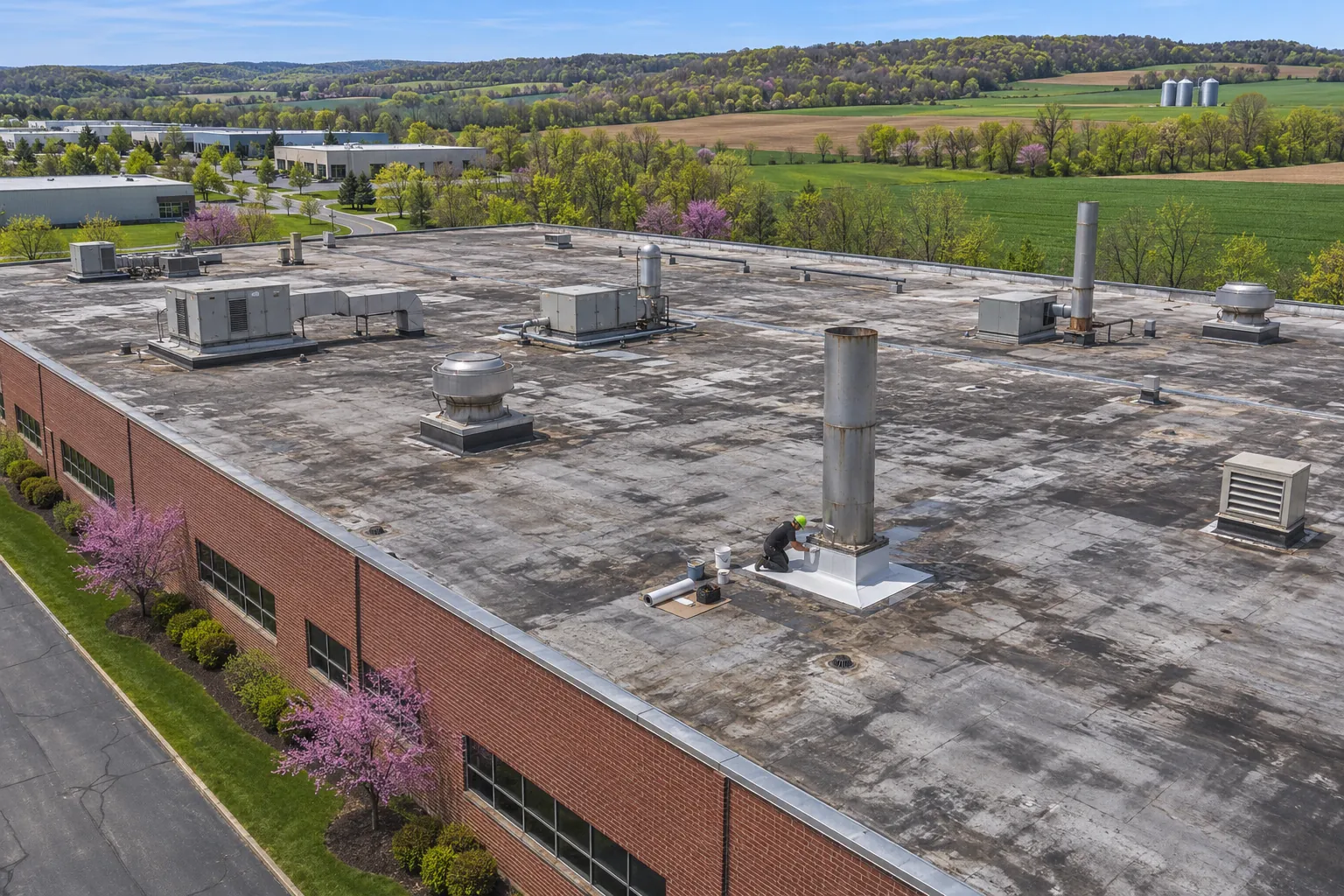
As a Lititz commercial roof repair contractor, we repair roofs over food and production floors, planning covers and containment before any cut into insulation or deck.
Lititz commercial roof repair on a production building starts below the roof, with the floor that sits under the opening.
Removing wet insulation or damaged decking can drop debris and moisture straight down. Over a food line or packaged product, even a small opening needs containment, covers, and a work window agreed with the plant before the first cut.
We walk the floor with whoever runs it, mark what sits under each repair area, and set the order of work so every opening is closed before that area goes back into use.
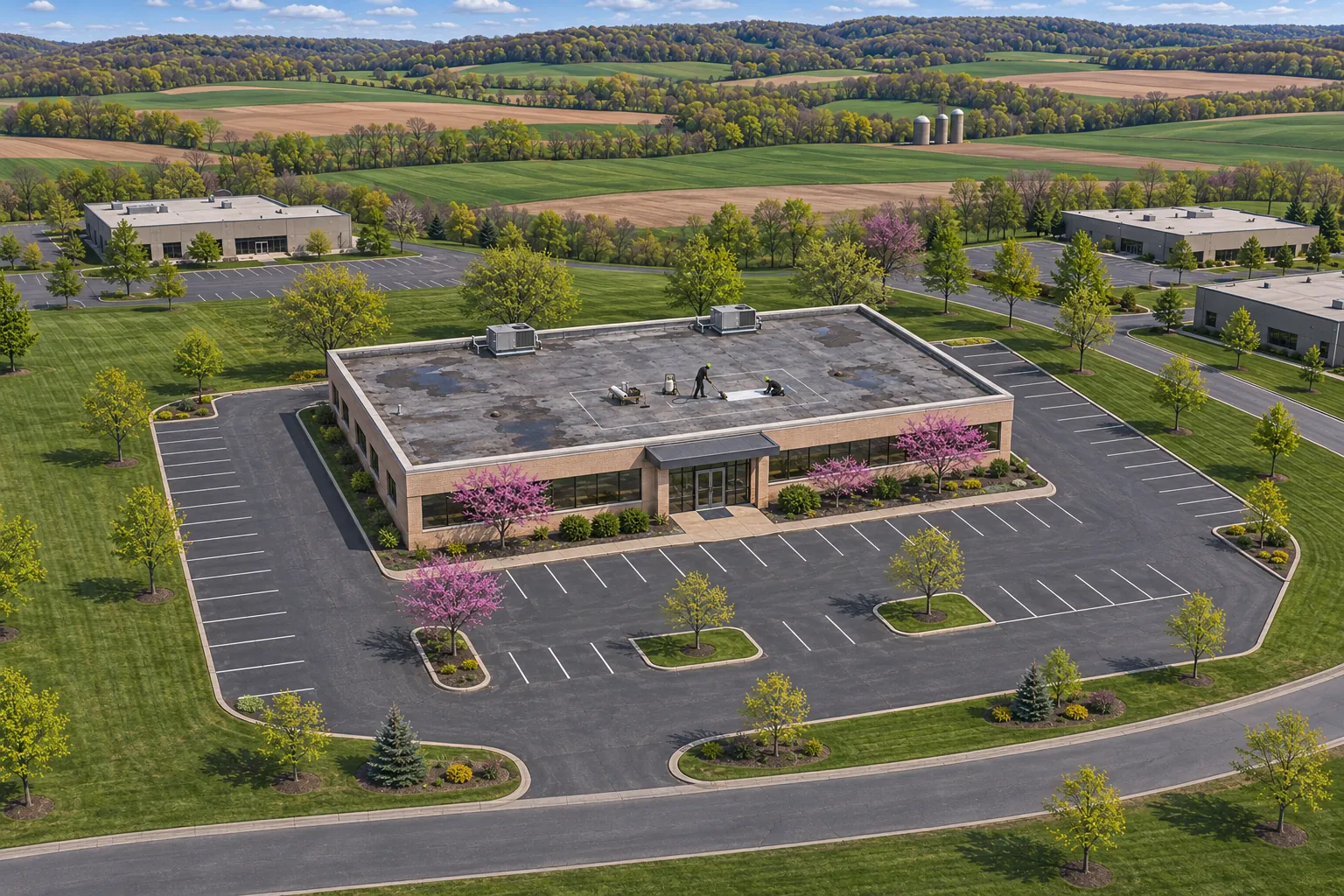
Production buildings show roof trouble around equipment and drains. These pairs match the floor sign to the roof detail.
A drain area patched last year is wet again after storms.
The fault sits in the outlet connection or the pipe below, which a surface patch never reached.
Spots appear on the floor or equipment under a roof fan during wash-downs or rain.
Fan curb flashing has opened, or moisture from the exhaust is condensing at the curb.
Packaging near one wall picks up water marks after windy rain.
Edge flashing or a wall joint lets driven rain under the membrane at the roof perimeter.
Ceiling panels over wet rooms stay dark even in dry weeks.
Humid air from inside is condensing under the deck, so the fix involves ventilation along with any roof repair.
Planning the floor side of a roof repair protects product, schedules, and the people working the line.
Over a working floor, the plan covers what happens below as much as what happens on top.
| Item | Why It Matters | How We Handle It |
|---|---|---|
| Floor under each opening | Debris and moisture fall when the roof is cut | Covers, containment, or temporary relocation |
| Air intakes nearby | Dust and fumes can enter the building | Work timed with intake shutdowns |
| Drain outlet and pipe | Patched drains leak again when the fault is below | Bowl, clamp, and pipe checked together |
| Shift and cleaning times | Openings need a window when the floor is quiet | Work order set with the plant |
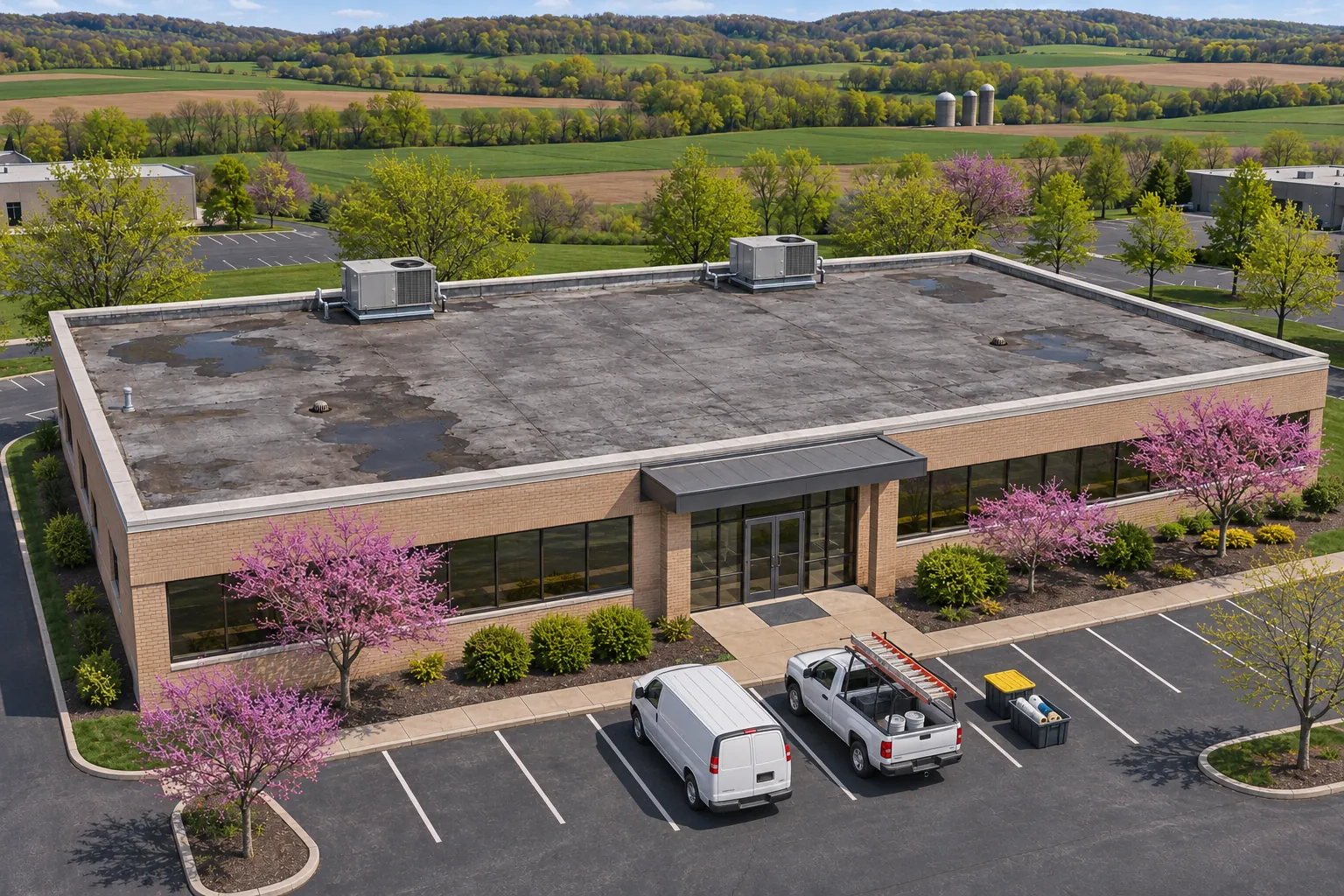
Send the address and which drain keeps leaking. We will check the bowl, the clamp, and the pipe below, then plan the repair around your floor.
Schedule Free InspectionOn a working floor, half the steps happen below the roof, so the lanes show each stage where it takes place.
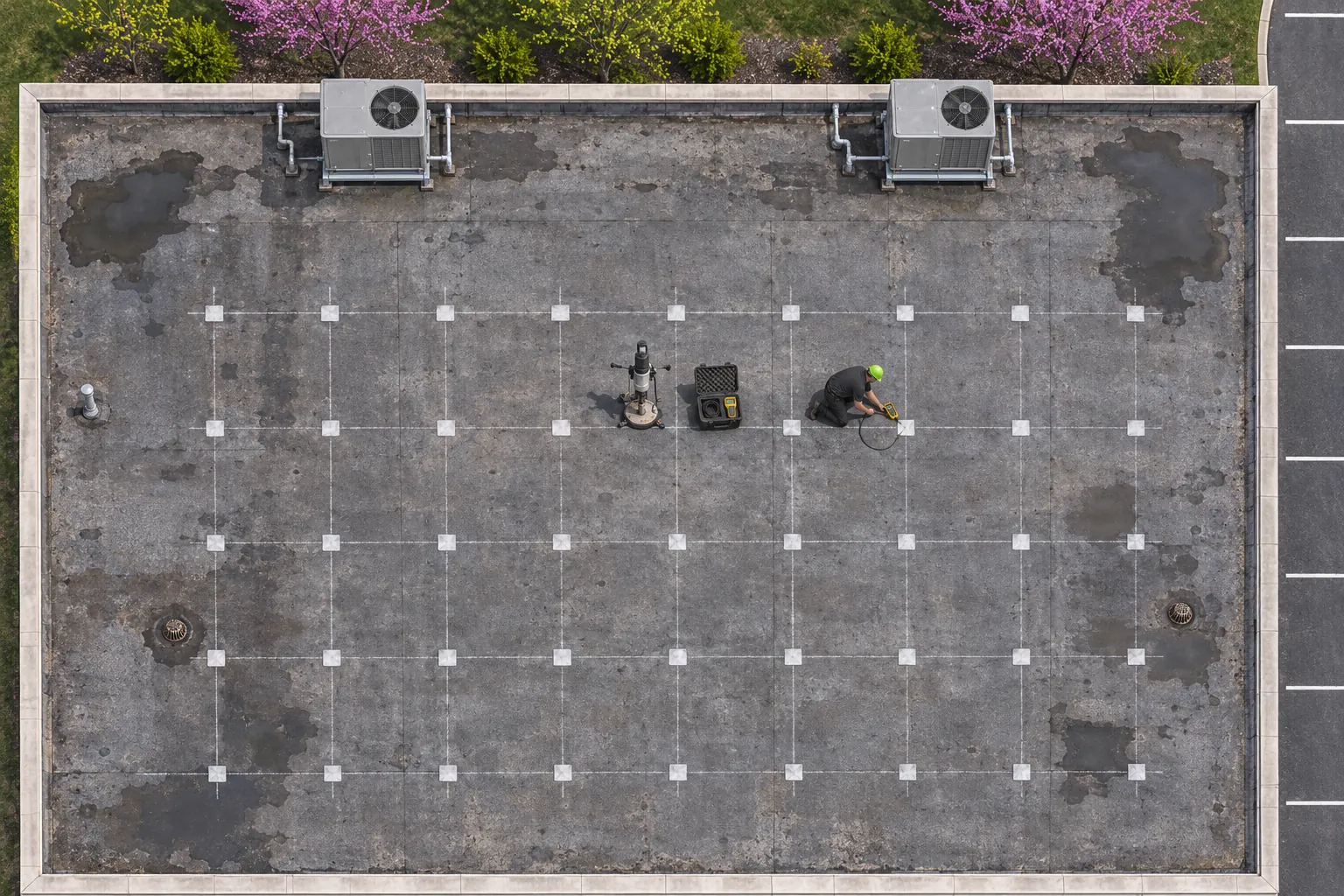
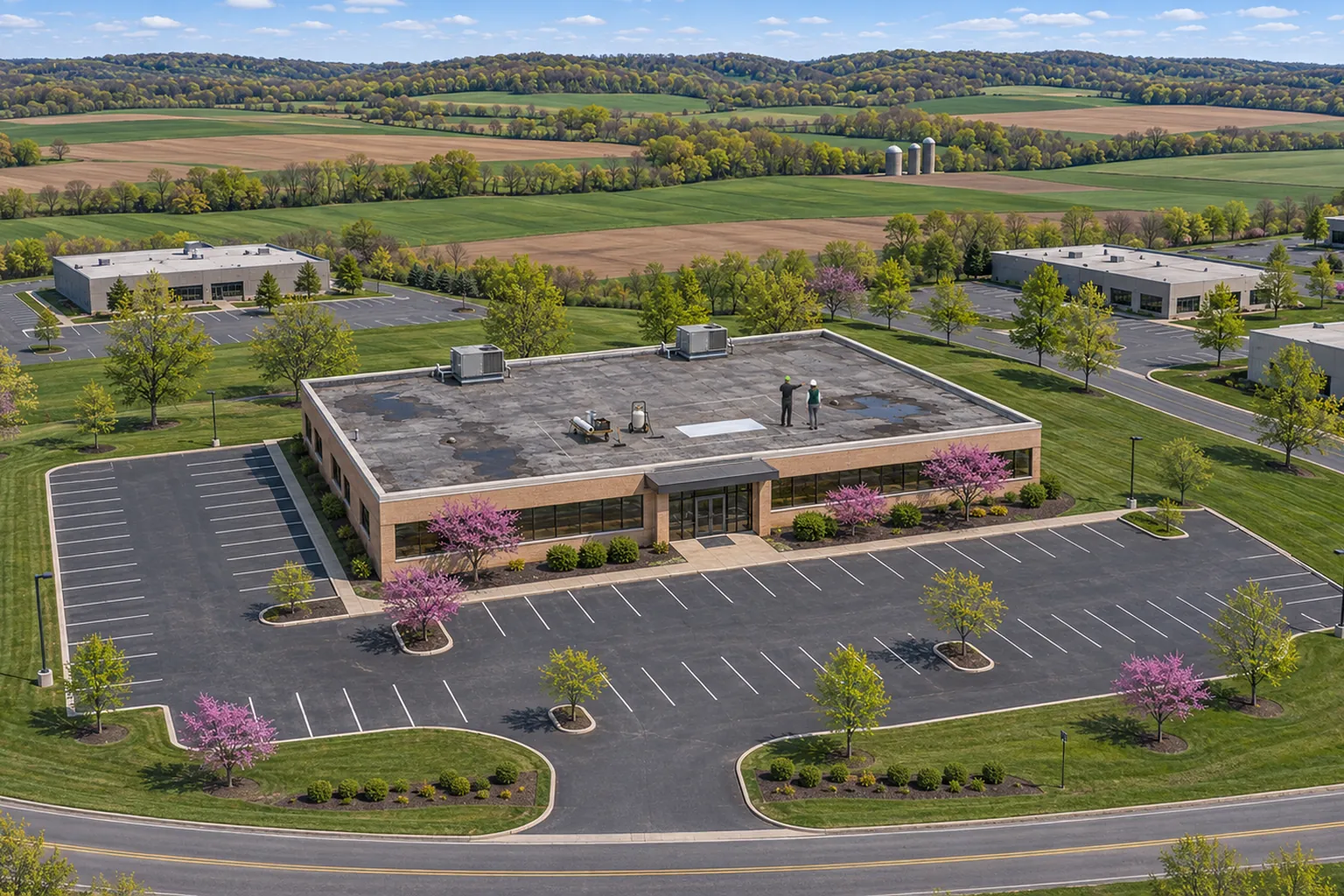
We walk the production area with your lead, marking what sits under each repair spot and when that space is quiet.
On the roof we check the drain bowl, clamp, curb flashing, and seams near the leak, coring where insulation could be wet.
Covers and containment go up under the opening at the agreed time, with air intakes shut or shielded.
The faulty component is repaired, the opening closed and checked, and the floor area handed back with photos of the work.
Lititz sits among the five towns we cover near Lancaster. If your building is elsewhere, call us or send us a message.
Warehouse leaks traced along the deck to their entry.
Metal roofs with rust hidden under panel overlaps.
Snowmelt routes, iced outlets, and freeze-thaw seams.
Farm and equipment buildings with isolated panel defects.
Drains, production floors, and scheduling questions from Lititz owners.
A fault in the outlet connection or the plumbing, rather than in the patched surface. We check the bowl, the clamping area, and the pipework, along with any blocked drainage. The new repair corrects the component we identify instead of repeating a treatment that missed it.
With covers, containment, and timing. We mark what sits under each opening, set the work for a quiet window, and keep air intakes clear of dust before any insulation or deck comes out.
They do. The size of the stain says little about what falls when the roof is opened, so even a one-patch repair gets a cover plan and an agreed time.
Yes, and that is often the easiest time. Tell us when the line stops, and we will plan the openings for that window with materials staged in advance.
Whoever runs the production area and whoever handles maintenance. Between them they know the equipment, the intakes, and the schedule that the repair plan needs to fit.
Tell us what runs under the leak and when the floor is quiet. We will plan the cover, find the fault, and price the repair.