Owner
- Undamaged panels kept, so you pay only for sheets that have failed.
- A clear count of panels replaced and why each one came out.
- Photos of the opened laps that set the limits.
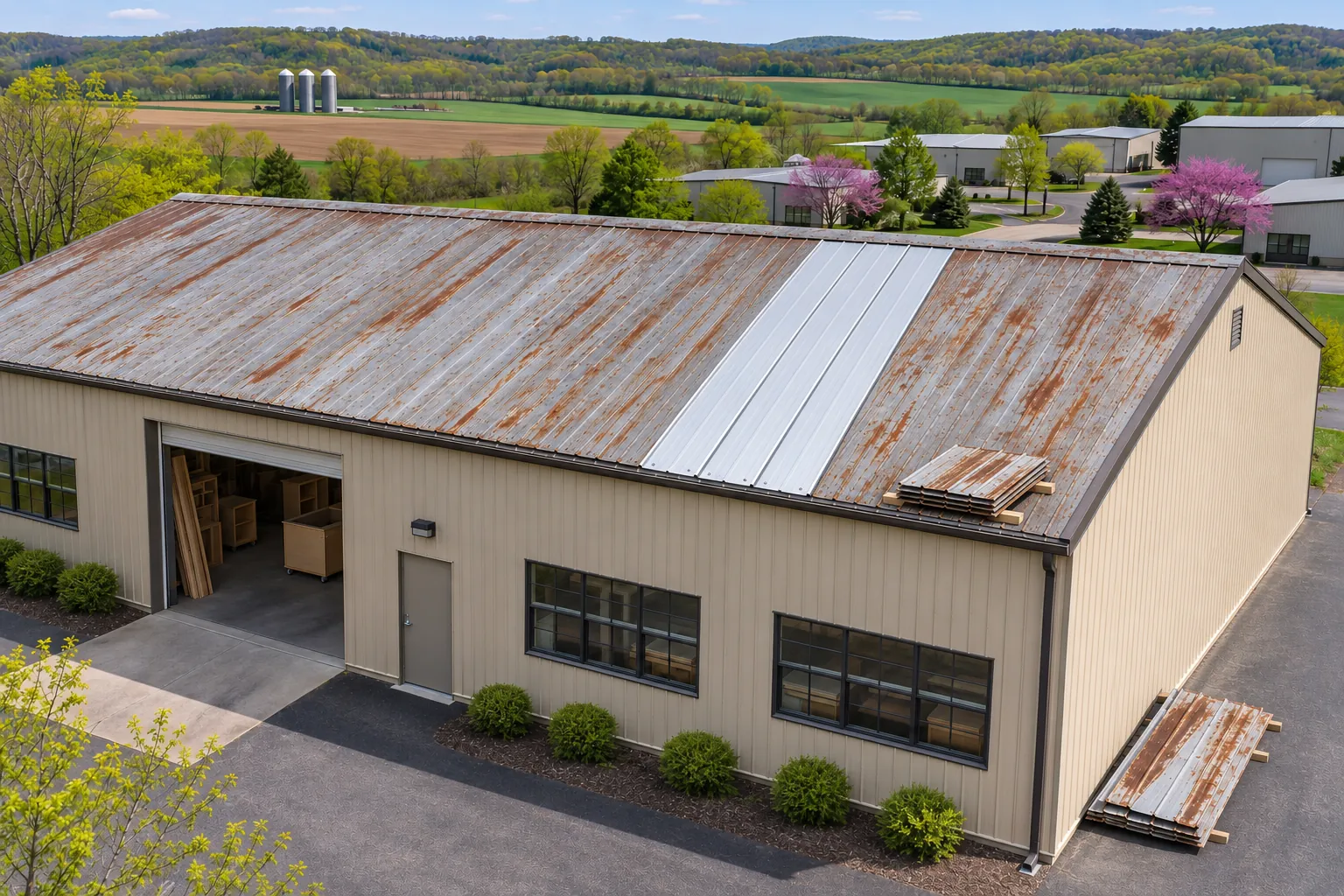
As a Columbia commercial roof repair contractor, we repair metal roofs by finding rust hidden under panel overlaps and replacing panels only out to solid steel.
Columbia commercial roof repair on a metal building comes down to one question: how far does the rust run under the overlaps?
A panel can look fine on top while corrosion spreads underneath, where two sheets overlap and hold moisture. Stopping a replacement at the first clean-looking edge leaves that hidden rust in place, and the next leak starts one lap over.
We lift laps, check metal thickness and fastening, and keep every undamaged panel that can connect securely to its seams and supports.
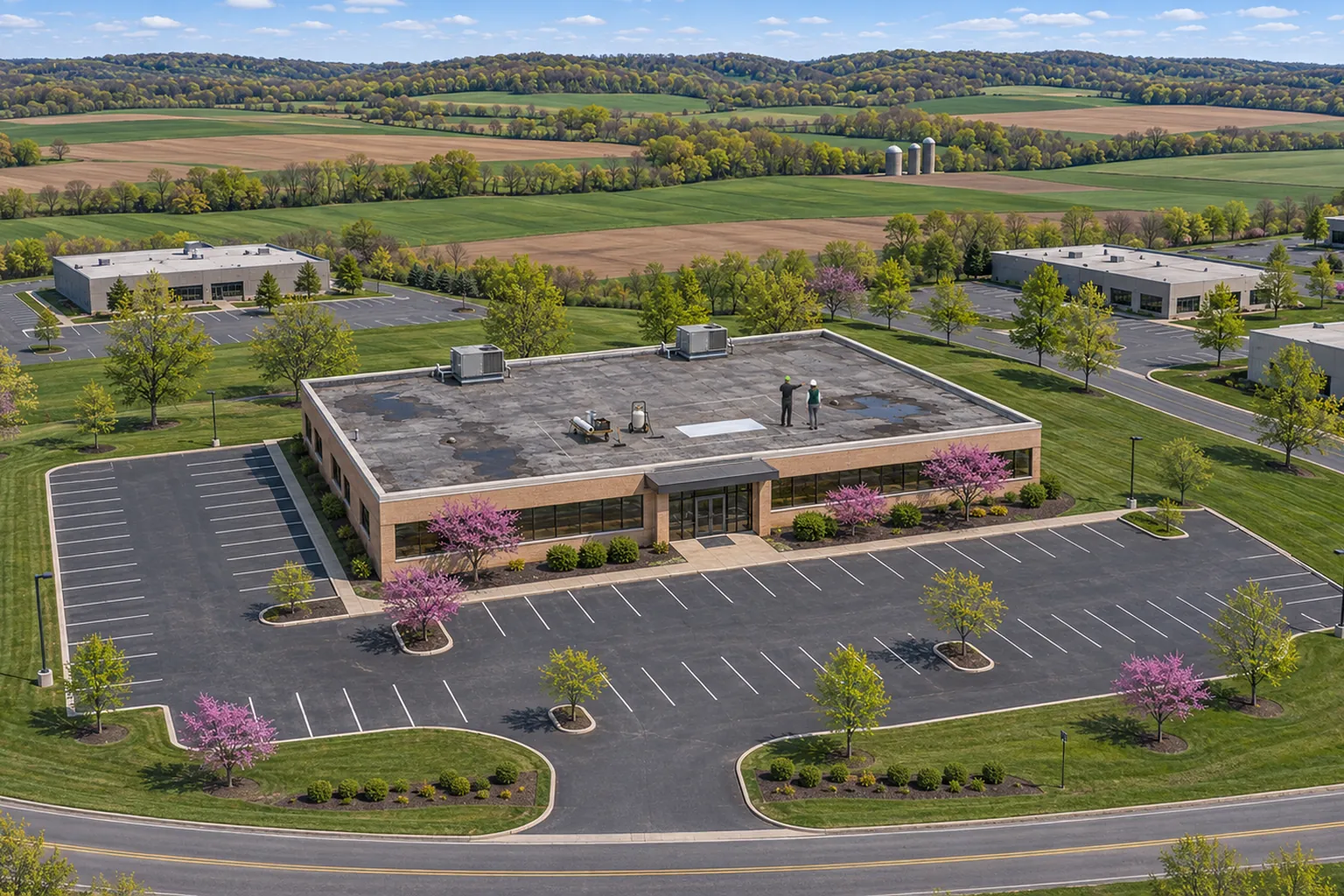
Metal roof trouble often hides under the overlaps. Here is what shows inside and what we find when the laps come apart.
Orange stains appear on the floor or stock with no screw line above them.
Moisture trapped between overlapping sheets has corroded the lower panel from the top side.
One section of roof rattles and drums loudly whenever rain or wind picks up.
Rust has thinned the panel or loosened its attachment to the purlins, so it moves between supports.
Recent refastening changed nothing, and the same screw line drips again.
The purlin or panel around the hole has rusted, so the screw has nothing solid to grip.
Leaks started right next to an earlier panel repair.
The earlier replacement stopped at a rusted lap, and the joint between old and new metal is failing.
Setting the right replacement limit protects the budget, the building schedule, and whatever is stored below.
Replacement limits come from the metal itself. These are the checks that set them.
| Check | What It Tells Us | Result |
|---|---|---|
| Underside of each overlap | Whether rust has spread into the next sheet | Limit moves to the first solid lap |
| Screw grip at the purlins | Whether supports still hold fasteners | Refasten, upsize, or repair the support |
| Metal thickness | Whether a panel can keep carrying screws | Keep or replace the sheet |
| Seam engagement | Whether new panels can lock into old ones | Profile and clip choice for the tie-in |
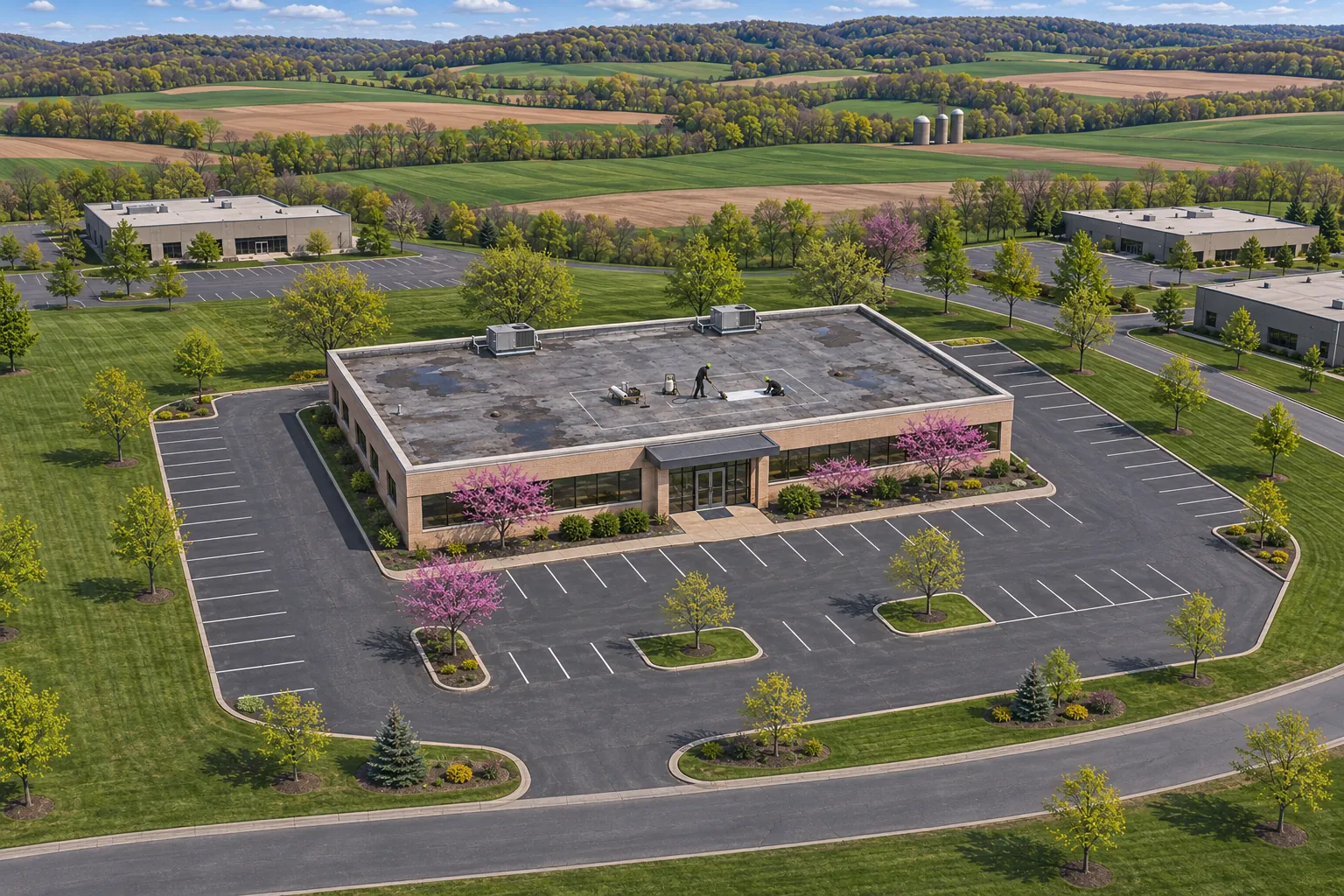
Send the address and the area that keeps leaking. We will open the laps, find where the rust stops, and price the panel work out to solid steel.
Get A Free EstimatePanel work alternates between the roof and the space below, so each step sits in the lane where it happens.
From inside we look for rust stains, daylight, and sagging panels, which shows where to start lifting laps up top.
Overlaps near the leak are opened and checked for hidden corrosion, panel by panel, until the metal comes back solid.
Equipment and stored goods below the panels coming off get covered or moved before any sheet is lifted.
Failed sheets come out, new panels with a matching profile go in, and each one ties into a solid lap and firm supports.
Columbia is on our list of five towns around Lancaster. Building somewhere else? Call us or send us a message.
Warehouse leaks traced along the deck to their entry.
Production floors protected before the roof is opened.
Snowmelt routes, iced outlets, and freeze-thaw seams.
Farm and equipment buildings with isolated panel defects.
Panel reuse, hidden rust, and planning questions from Columbia owners.
Yes, if the repair can connect securely to their seams and supports. We inspect neighboring metal and attachment points before setting the replacement limits. Keeping a panel follows its condition, so any sheet with corrosion continuing under the overlaps comes out even when the goal is to remove as little as possible.
By opening it. We lift overlaps near the leak, look at the lower sheet, and check metal thickness with a probe, working outward until the steel comes back solid.
They need to, so the laps lock and shed water. We match the rib profile and gauge of the existing roof and note any panels where an exact match calls for a different tie-in detail.
Usually, with the area below each opening cleared or covered. Panels come off and go back on in short runs, so only a small part of the roof stays open at once.
Look for rust stains, new drips, or loose screws near the tie-in after the first few storms, and send photos if anything appears. We compare them with the repair photos to see whether the joint or a separate spot is involved.
Tell us where the rust shows and what sits underneath. We will open the laps, set the limits from solid steel, and price the panel work.