A Metal Repair Fits
- Backed-out screws in otherwise solid panels
- Rust at one lap with firm metal beside it
- A seam that opened along one run of panels
- Flashing at a curb or wall that has lifted
- Supports that still hold new fasteners tight
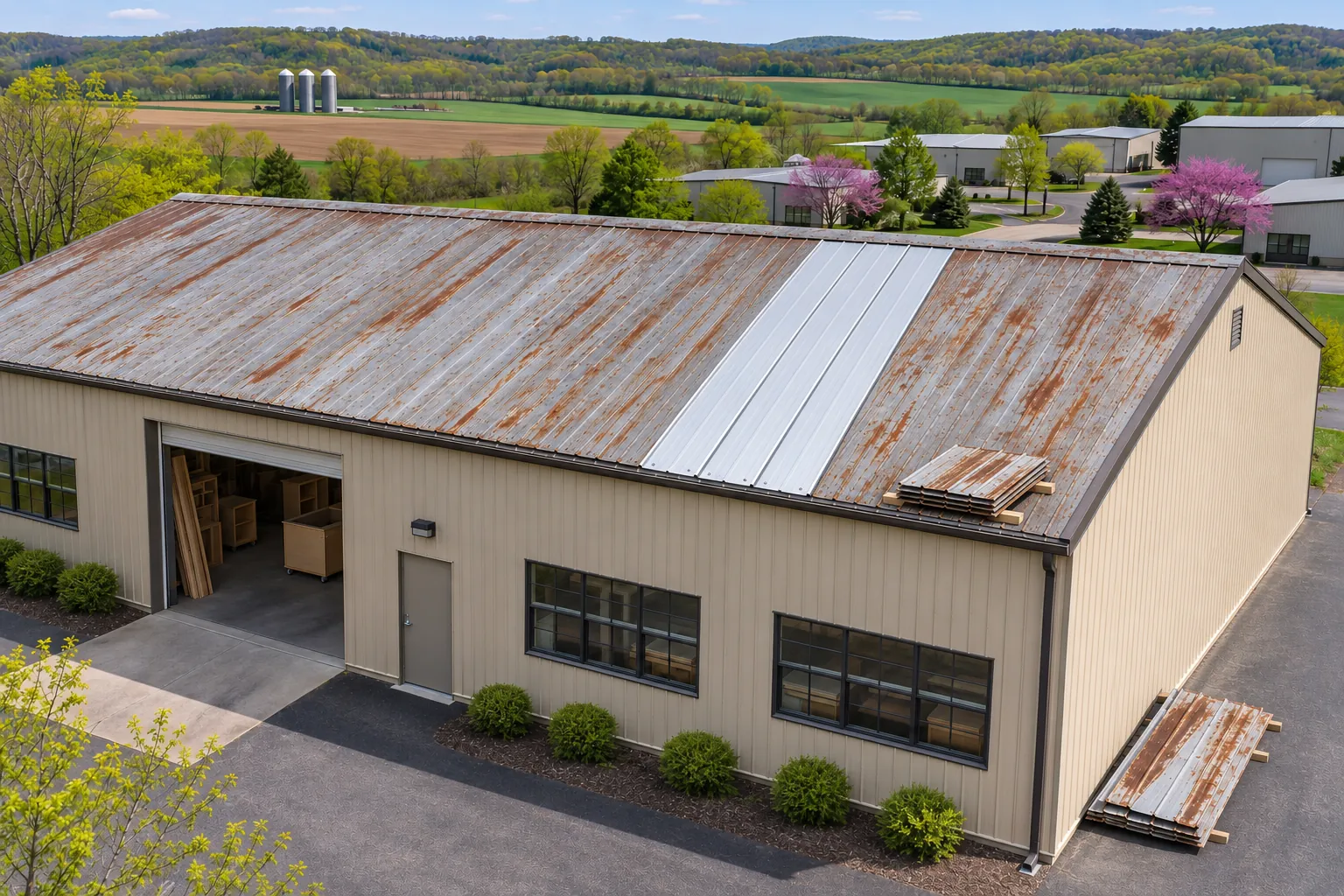
As a Lancaster commercial metal roof repair contractor, we replace rusted panels, refasten loose screws, and rework failing seams on shops, barns, and equipment buildings.
Lancaster commercial metal roof repair works when the steel around the defect still holds. Here is how we tell a repair from a larger panel replacement.
Metal roofs leak in a few repeat places. These pairs tie what you see inside to the panel detail behind it.
Drops land in a neat row on racks or equipment, spaced the same as the purlins.
Screws have backed out with daily expansion, or washers have dried and cracked around the shank.
Orange streaks run down the wall girts or show on stock near one roof section.
Corrosion has started where two panels overlap and holds moisture between the sheets.
From inside you can see daylight along one panel edge on a sunny day.
A seam has pulled apart because the panel engagement, fastening, or allowance for movement has failed.
Water drips on cold mornings even after several dry days.
Warm, humid air inside meets cold steel and condenses; insulation or ventilation solves it, and a roof patch leaves it unchanged.
Each method matches one way metal roofs fail. The panel profile and the state of the supports decide which one applies.
| Repair | When It Fits | Checked First |
|---|---|---|
| Refastening | Screws backed out or washers cracked across a panel run | Hole size, purlin condition, and washer type |
| Panel replacement | Rust through one or more sheets | How far corrosion runs under the overlaps |
| Seam rework | Seams that opened or keep separating | Panel engagement, clips, and movement at the joint |
| Flashing repair | Lifted trim at walls, curbs, and ridges | Fastening, sealant, and the metal beneath |
Tight laps and firm screws matter to everyone who owns, runs, or works inside a metal building.
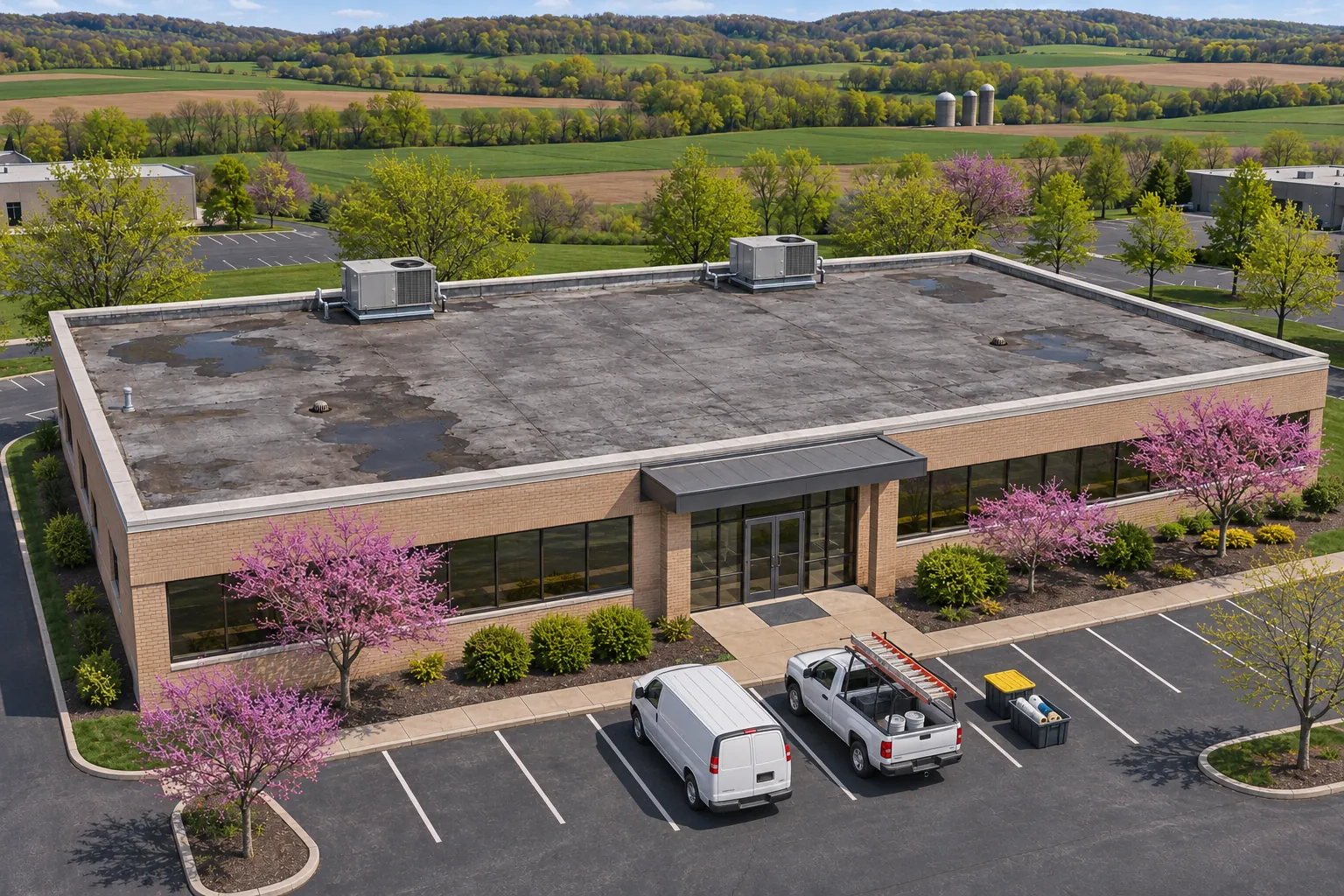
Send the address and a photo of where the drops land. We will check the screws, laps, and seams overhead and price the metal repair.
Get A Free EstimateMetal repairs move between the panel tops and the underside of the roof, so each step sits in the lane where it happens.
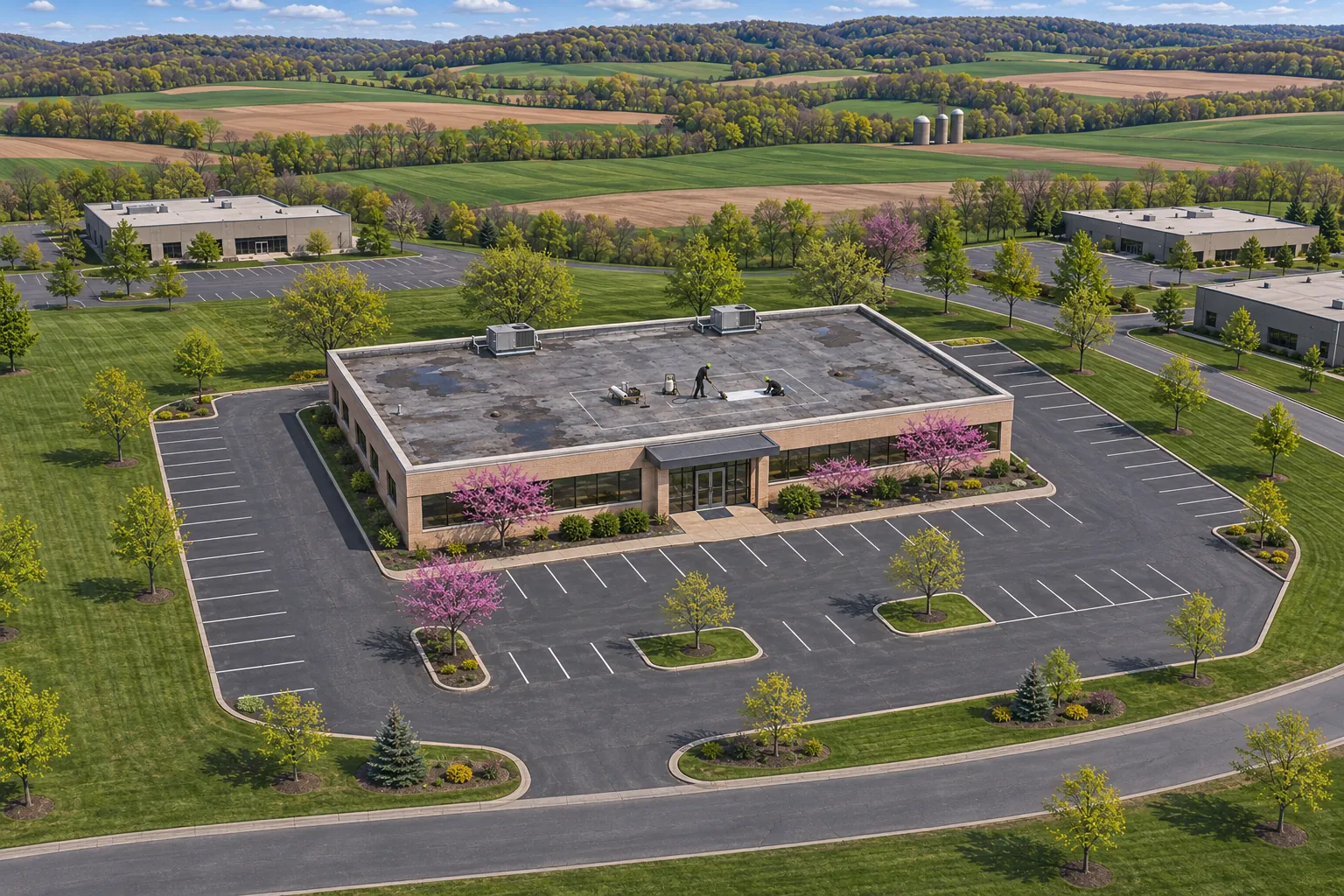
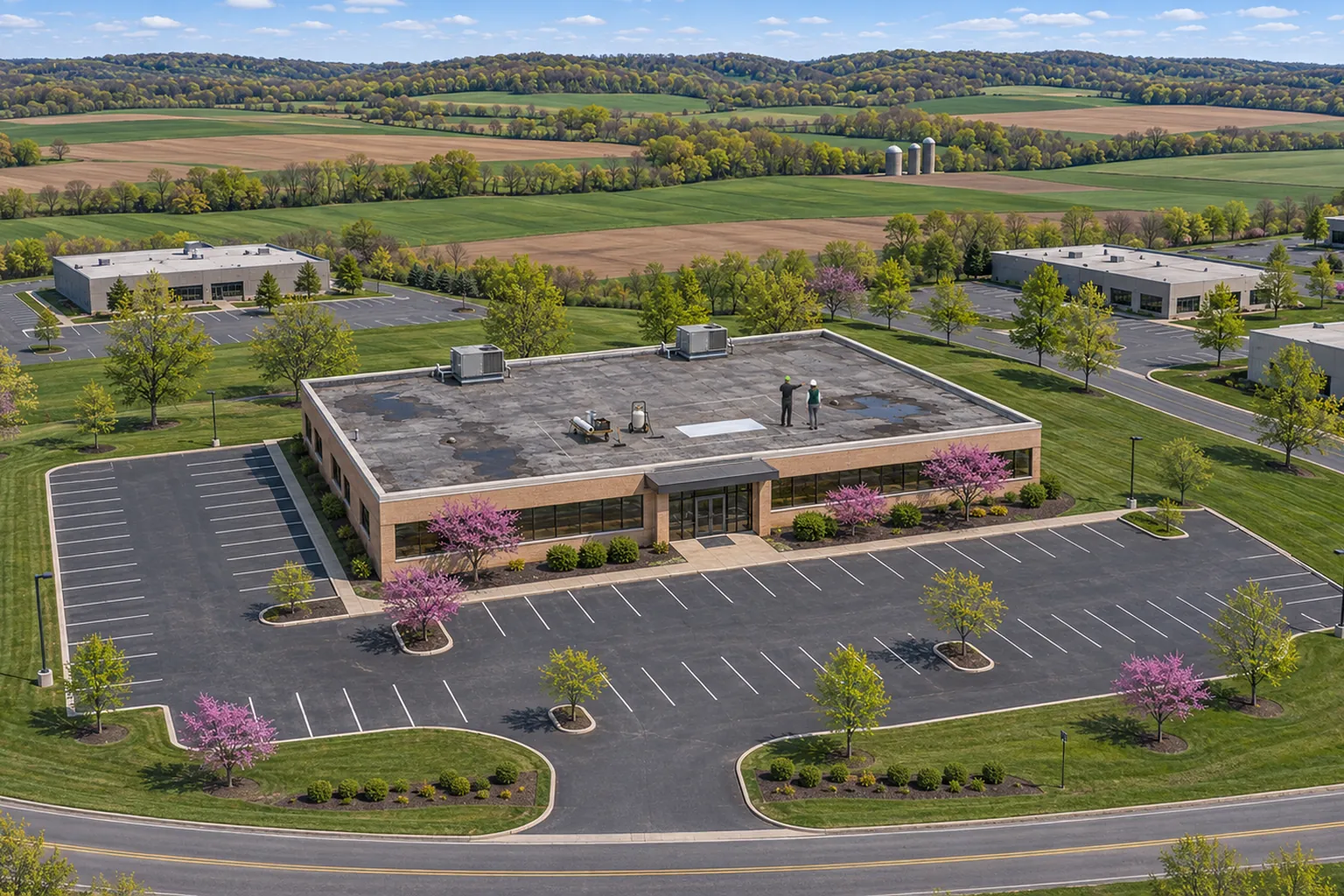
From the floor we note daylight at seams, rust at laps, and drip lines, which tells us which panel runs to check up top.
On the roof we test screws for grip, measure rust at the overlaps, and check seams for engagement and movement.
Equipment and stock under panels coming off get moved or covered, since debris and old fasteners can fall during the swap.
Rusted sheets come out to solid laps, new panels go in with a matching profile, and loose screws get replaced with new or larger ones.
A metal roof repair sometimes connects to other work on the same building.
If drips show up away from any screw line or lap, leak repair traces the path before a single panel gets replaced.
Metal buildings with a low-slope addition often leak at the joint between the two, where flat roof repair handles the membrane side.
Plant buildings with metal roofs carry exhaust fans and stacks, and industrial roof repair reflashes those curbs.
Rust, seams, farm buildings, and remaining life on metal roofs.
It often does. Corrosion under an overlap can spread into the neighboring panel, so the damaged sheet is rarely the only one involved. We check metal thickness, fastening, and the receiving seam before setting limits. New panels connect to solid material, since stopping at an arbitrary edge leaves the next weak joint in place.
The fix targets the cause at the joint. We check panel engagement, fastening, and how the joint moves, then look at old sealant and how the seam was assembled. The new detail fits that roof system and lets the joint move as designed, instead of clamping a connection meant to flex.
Yes, when the panels and supports around the problem are still solid. Loose screws, one rusted run, and a lifted flashing are all repairable. Replacement comes up when rust runs through many sheets, reaches the purlins, or thins panels until screws pull out.
Yes, when the metal and supports around them are in good shape. We inspect the panel underside where we can reach it and check neighboring connections for related damage. A local repair covers the whole defect, including any attachment or flashing problem that would reopen the same water path.
The panels, supports, and connections outside the repaired area set the limit. We look at corrosion, drainage, and repeat movement before describing what upkeep comes next. A good local repair says little about how long unrelated parts of the roof will last.
Tell us where the drips land and what sits under them. We will check the screws, laps, and seams and price the panel work.