A Patch Or Local Repair Fits
- A single split seam or puncture
- Dry insulation in the cores around it
- A membrane that still takes a weld or adhesive
- A drain leak traced to the clamp or flashing
- An older patch still bonded at every edge

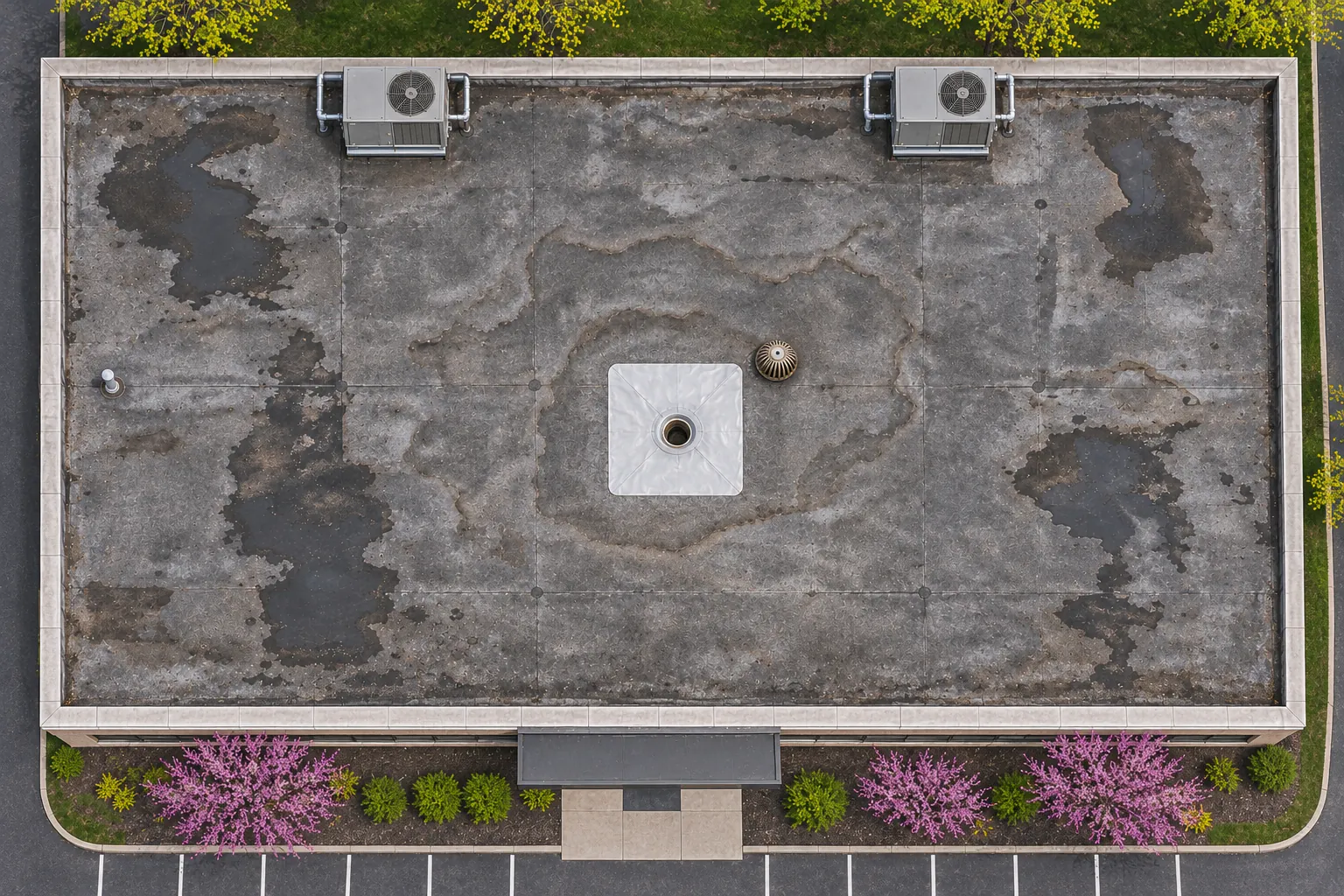
As a Lancaster flat roof repair contractor, we fix split seams, lifting patches, and leaking drains on membrane and built-up roofs, sized from cores and an on-roof trace.
Lancaster flat roof repair works best when the leak has edges you can find. These lists show where a patch fits and where a section needs replacing.
Low-slope roofs show trouble inside first. These pairs connect each indoor sign with the flat roof detail behind it.
Ceiling tiles sag in the middle of a bay after storms, well away from any wall.
Water sits for days in a low area, and the membrane under the pond has cracked or opened at a lap.
The same stain returns a few months after each repair, in the same tile.
The patch edge has lost its bond to damp or mismatched material beneath it; another layer on top would trap the failure.
Drips run down the drain pipe inside, and the floor around the drain stays wet after rain.
The clamping ring, the flashing at the bowl, or the pipe joint below has separated.
Spots line up in a straight row across the ceiling grid.
A seam has opened from age, movement, or weak original welding, letting water track along the lap.
The method follows the roof system and the cause, once the cores have shown what is dry.
| Repair | When It Fits | Checked First |
|---|---|---|
| Seam reweld or strip-in | Thermoplastic or rubber seams that opened along a lap | Membrane type, seam age, and moisture beside the lap |
| Patch removal and section repair | Patches that lift because the material under them moved or stayed wet | Bond of the old patch and dampness of the board |
| Drain bowl reset and reflash | Leaks at the bowl, clamp, or flashing around the drain | Clamping ring, bowl seat, and the pipe connection below |
| Wet insulation replacement | Cores showing wet board under the leak area | Moisture boundary found by core cuts and probing |
Fixing a flat roof at its source changes things for owners, managers, and the people working under it.
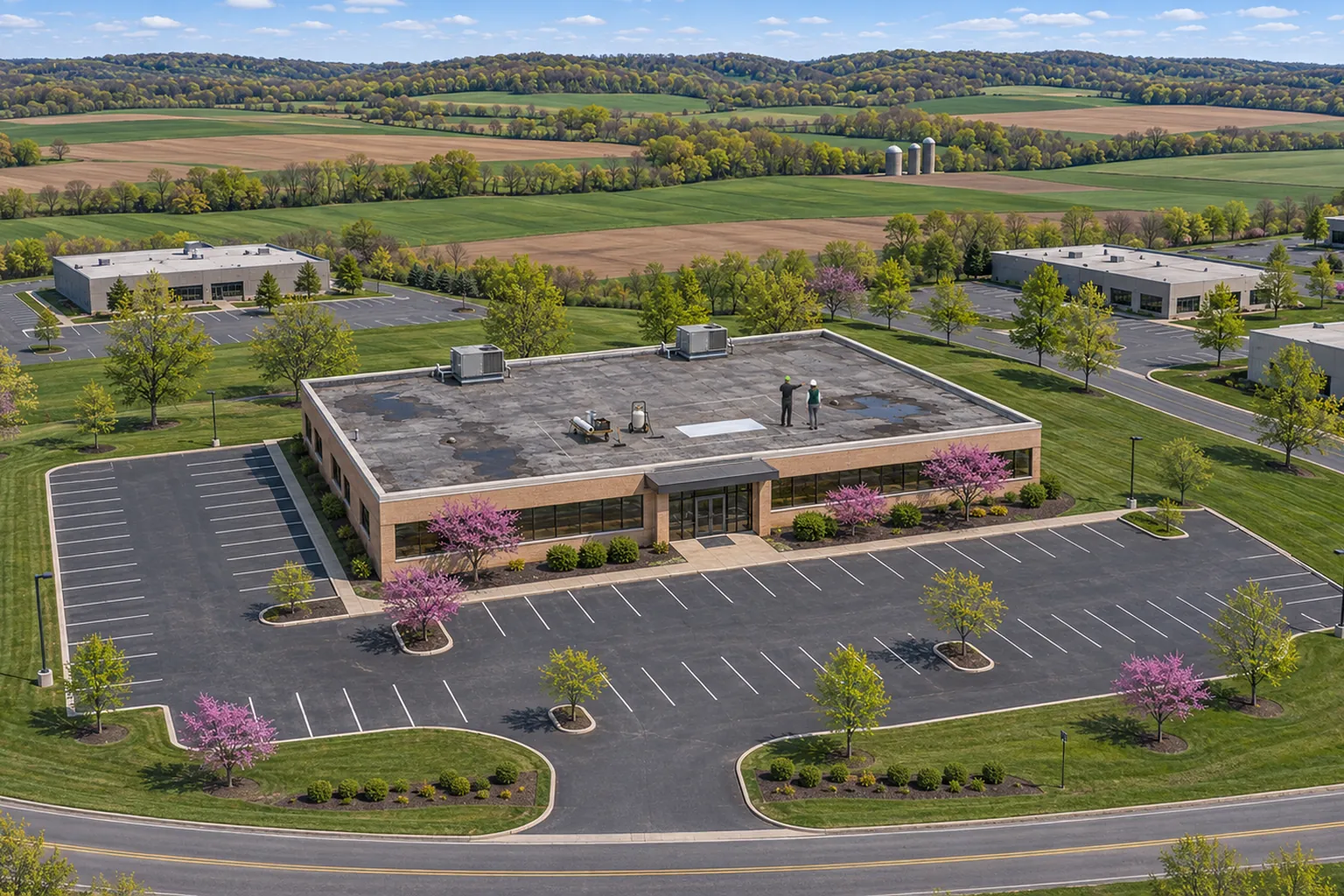
Send the address and point us to the wet tiles. We will core the area, find the seam or drain at fault, and price the flat roof repair.
Schedule Free InspectionFour stages take a flat roof from the first wet tile to a closed seam or reset drain, each in its own lane.
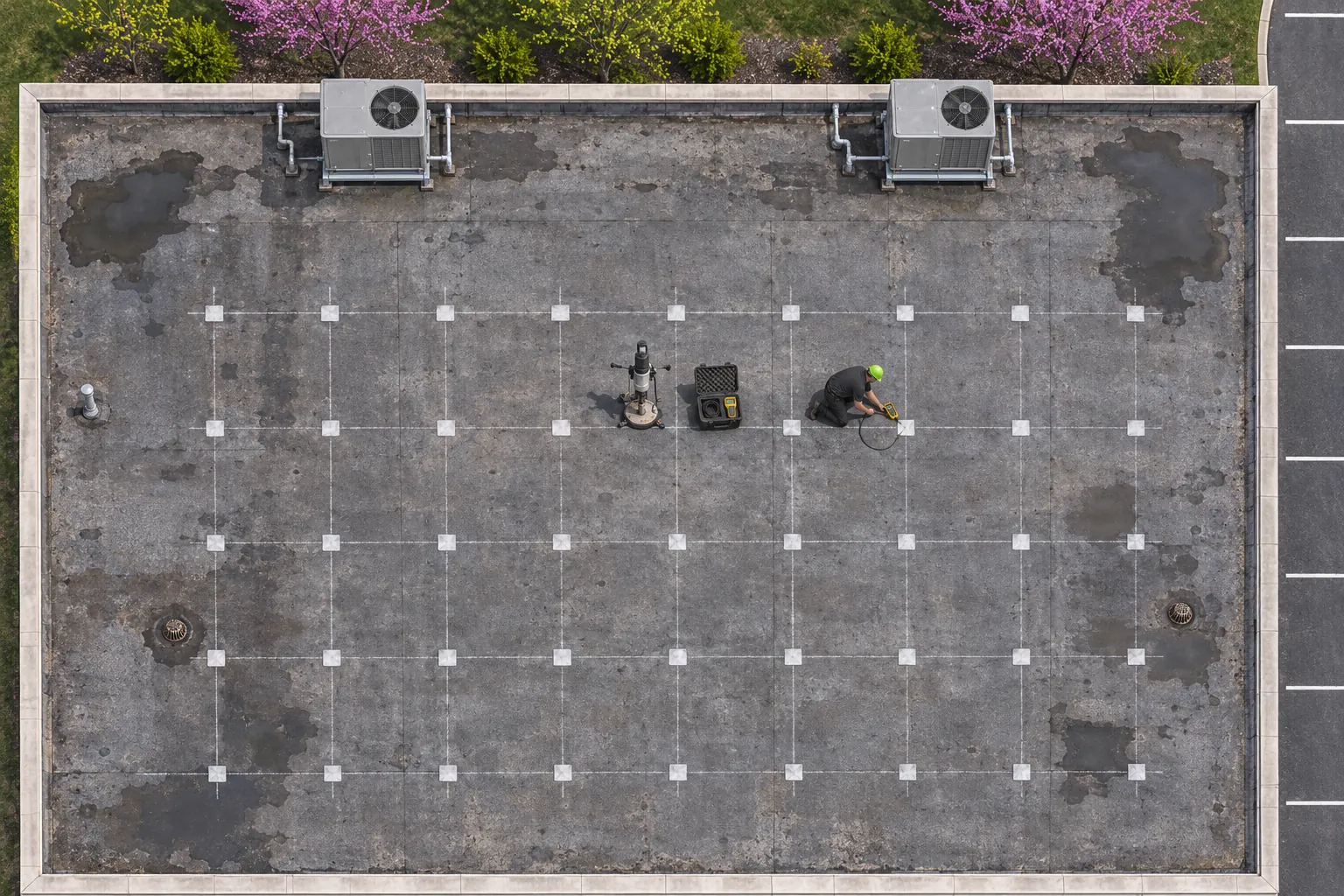
Staff show us where tiles stained and when, which narrows the search to a few seams, drains, or penetrations above.
Core cuts around the suspected entry show whether the board is wet and how far the moisture reaches across the field.
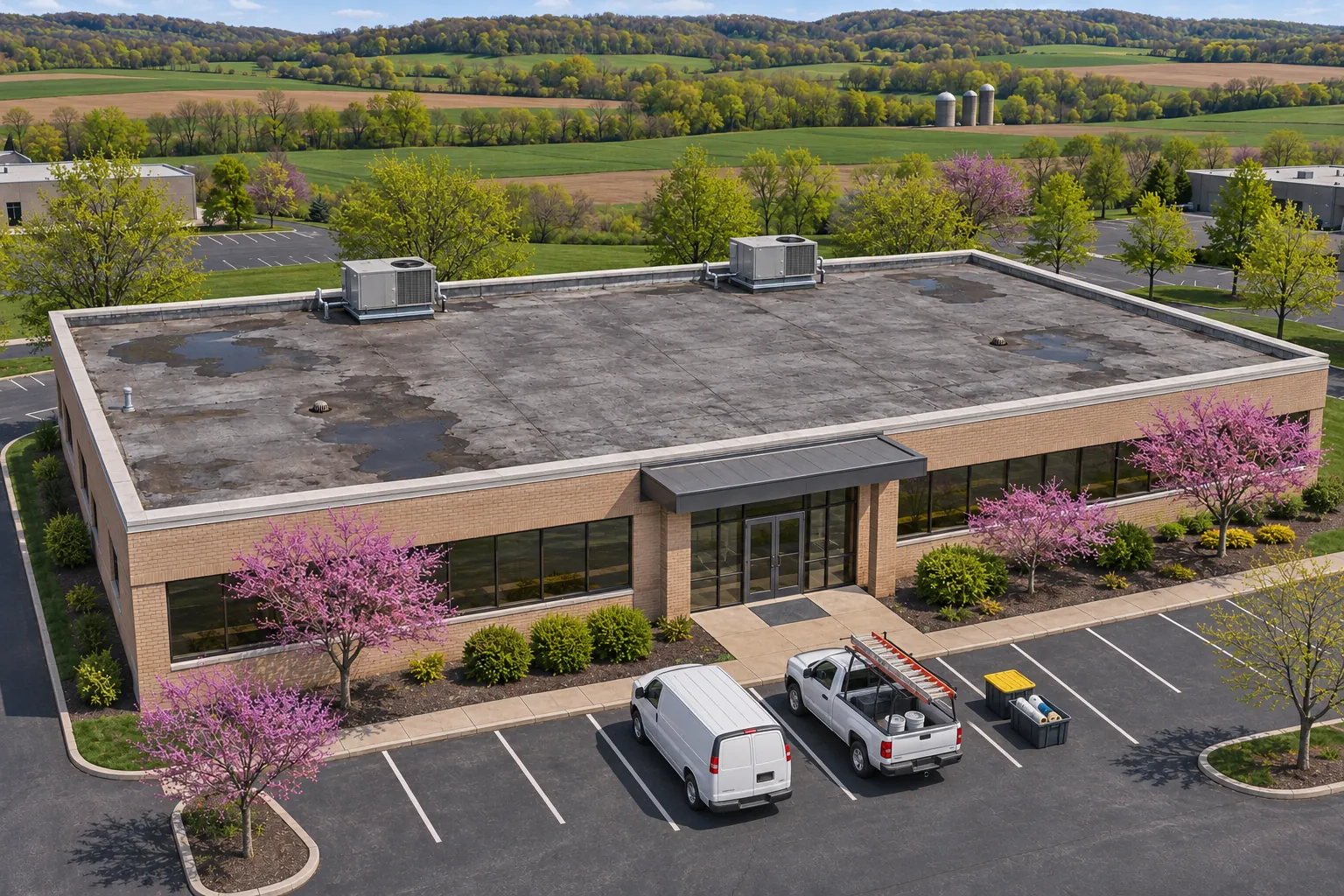
Desks, shelving, and stock under the cut get covered or moved before old patches and wet board come out.
The opened seam is welded, the drain reset, or the wet section replaced with matching material tied into dry roofing.
Some flat roof calls turn into another kind of repair once the trace is done.
When the stain moves around and no seam looks open, leak repair follows the water across the deck before anything gets patched.
Flat roofs on plants carry stacks and fan curbs, and industrial roof repair handles the flashing around that equipment.
Buildings with a metal addition beside the flat roof often leak where the two meet, which brings in metal roof repair.
Patches, drains, pricing, and materials on low-slope roofs, answered for Lancaster owners.
Rarely. A lifting patch means its bond or the material under it has failed, so another layer on top keeps the same problem in place. We identify the roof system and check for moisture or movement around the old repair. Removing the patch, or replacing that section, deals with the cause.
The roof material gets identified first. We check the existing membrane, earlier patches, and the condition of the board beneath, then pick a detail that bonds to that system. A general-purpose surface product can peel or trap water when it was never matched to the actual roof.
Many repairs can. Seam welds, drain resets, and fastened patches go on in cold weather once the surface is dry and clear of ice. Adhesive steps need warmer, dry days, so some work gets split: a temporary seal now and the final detail when conditions allow.
Flat roof drain repair covers the joint between the roofing and the outlet, while a fault in the pipe below is plumbing work. When water appears near a drain we check both. Coordinating the two before the roof is opened keeps a repaired membrane from sitting over a leaking connection.
The visible leak rarely shows the whole job, so the price comes from an inspection on the roof. It reflects leak tracing, the roof system, the size and number of damaged areas, wet insulation found by core cuts, flashing, drains, and access. Those findings also decide between a repair and replacing the affected section.
Point us to the wet tiles and the drains nearby. We will core the area, find the failed seam or bowl, and price the repair.