Leak Repair Fits
- Stains that move from storm to storm
- Drips with no open seam directly above
- Water near rooftop units or penetrations
- Leaks that started after equipment service
- Wet spots that appear only in a thaw

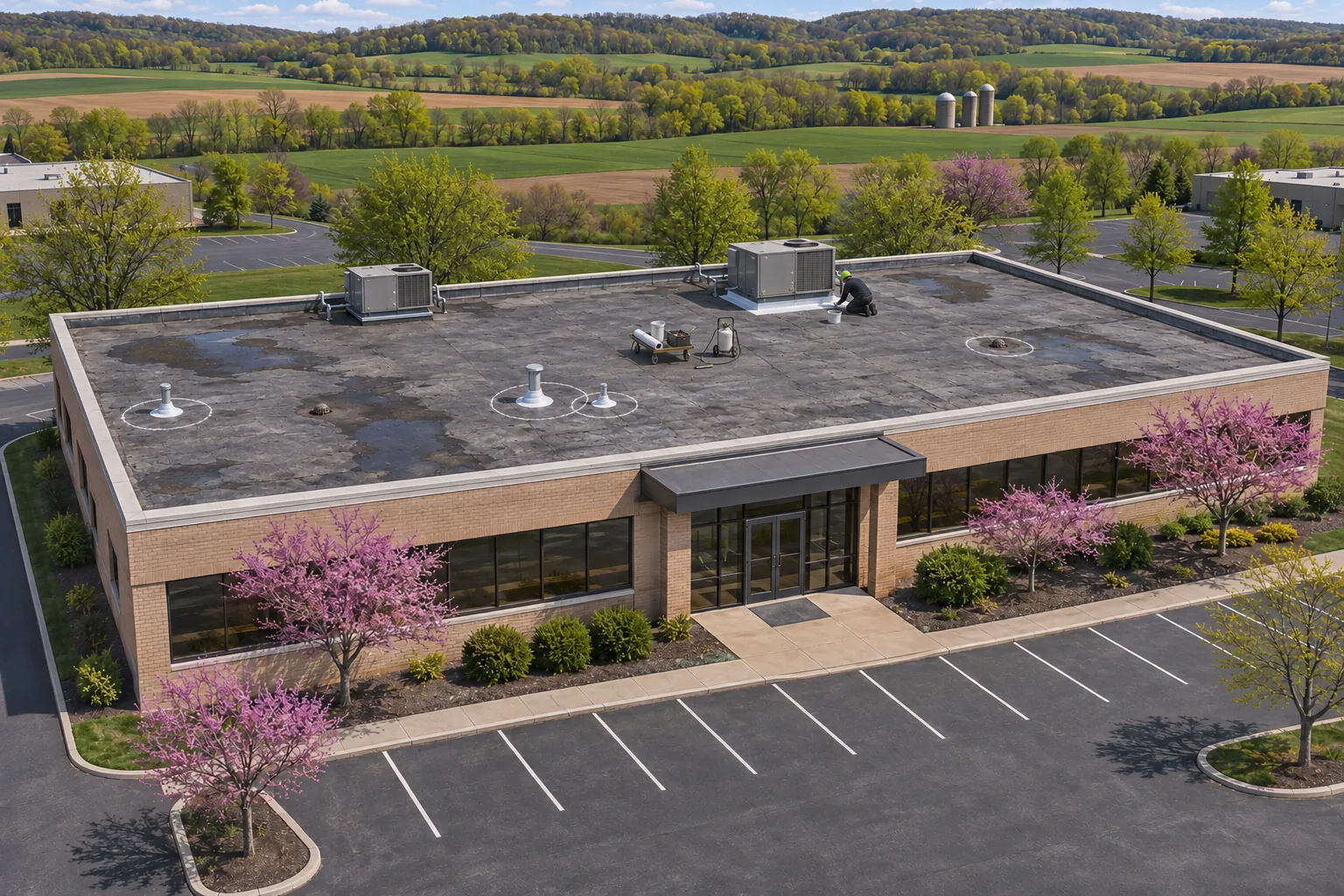
As a Lancaster commercial roof leak repair contractor, we follow water from the stain back to the seam, curb, or drain letting it in, then repair that detail.
Lancaster commercial roof leak repair fits when water shows inside and the source is unclear. Some leaks point to another trade or a larger repair instead.
Water rarely drips straight below its entry point. These pairs show what you see inside and where the trace tends to lead.
Water shows under a unit on humid days or right after a service visit.
Condensate drains, open service panels, or curb flashing can each be the source, so the unit runs while we check.
A wet ceiling panel sits in the middle of a bay with nothing on the roof directly above it.
Water entered upslope and traveled along the deck or insulation; the trace follows that path back.
Leaks start once the sun melts snow, then stop overnight when it refreezes.
Ice at gutters or outlets holds meltwater against laps and flashing that shed normal rain.
Paint bubbles and plaster stays damp along an outside wall below the roofline.
Water can enter at the coping or masonry above the flashing, which calls for a wall repair rather than a membrane patch.
Tracing relies on a few plain methods, picked for the roof system and the season.
| Method | When It Helps | What It Shows |
|---|---|---|
| Trace from inside | Every leak, as the first step | Where water lands and how it travels across the deck |
| Core cuts | Leaks over insulated roofs | Whether the board is wet and how far moisture spreads |
| Equipment run test | Leaks near rooftop units | Condensate and service-panel water compared with roof water |
| Weather and timing log | Leaks that come and go | Links between leaks and rain, thaw, wind, or equipment cycles |
Closing the real entry point ends the cycle of buckets and repeat patches for everyone in the building.
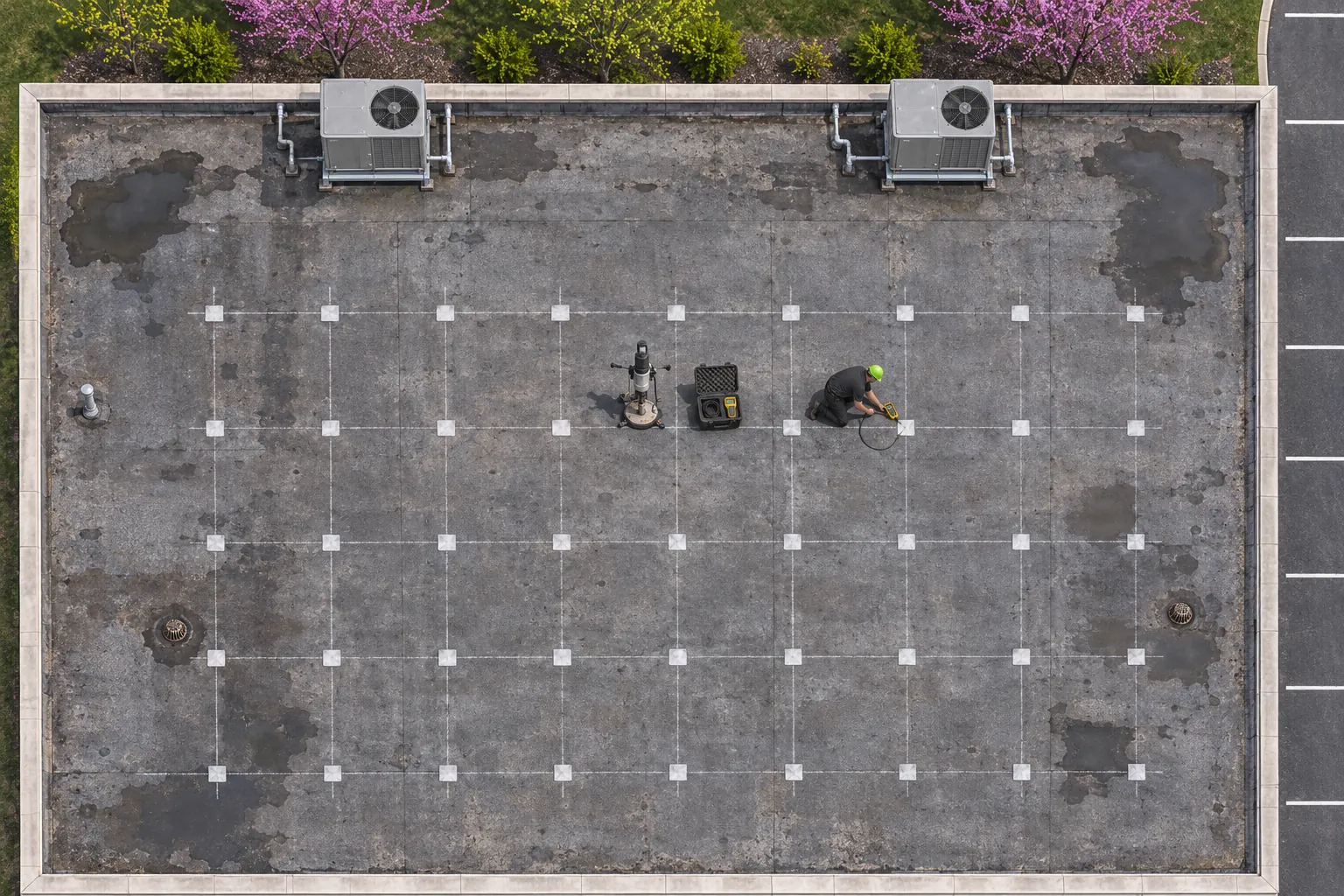
Send the address and the places water has shown up. We will trace the path back to its entry and price the repair from there.
Schedule Your Free InspectionLeak tracing jumps between the roof and the rooms below, so each step sits in the lane where the work happens.
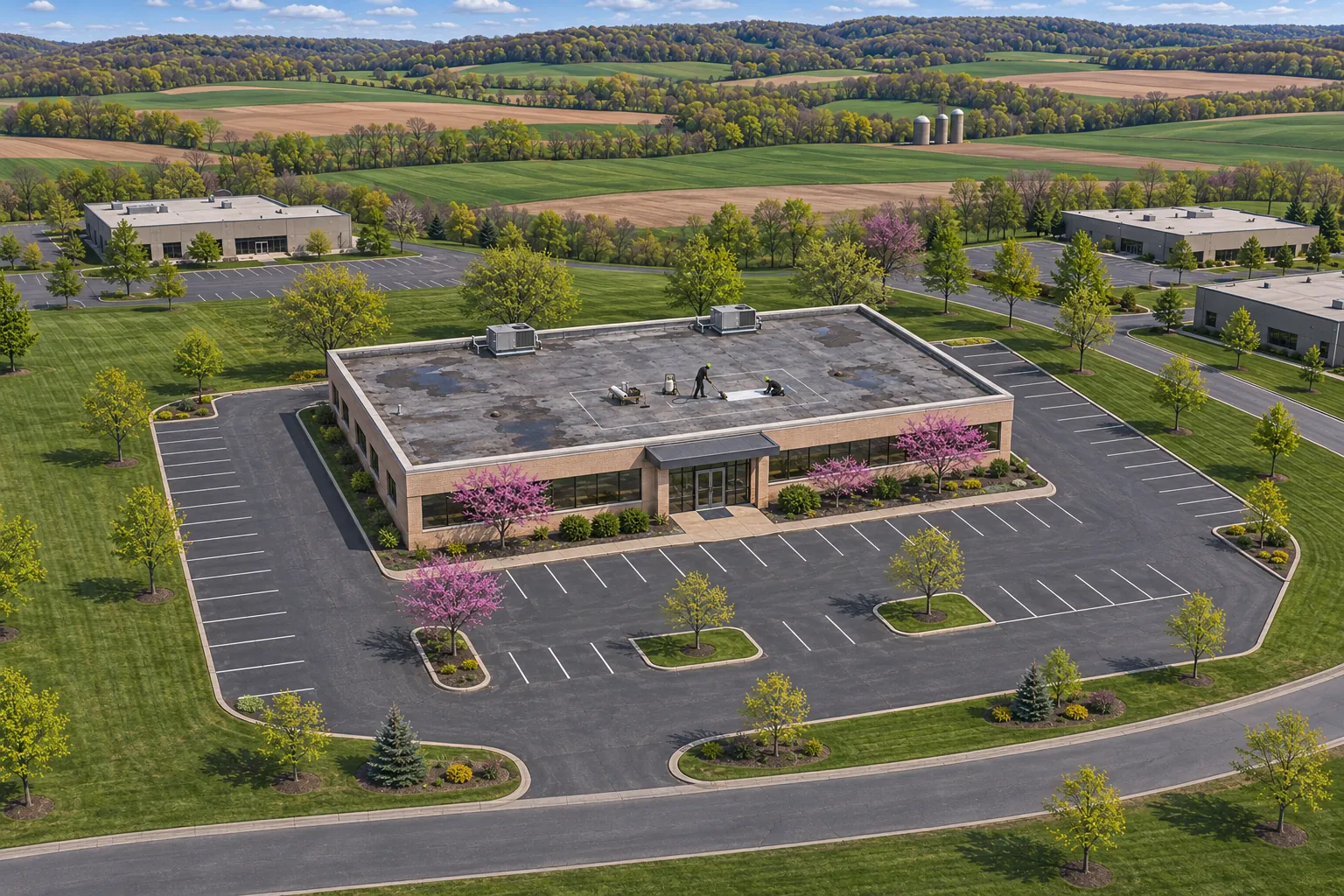
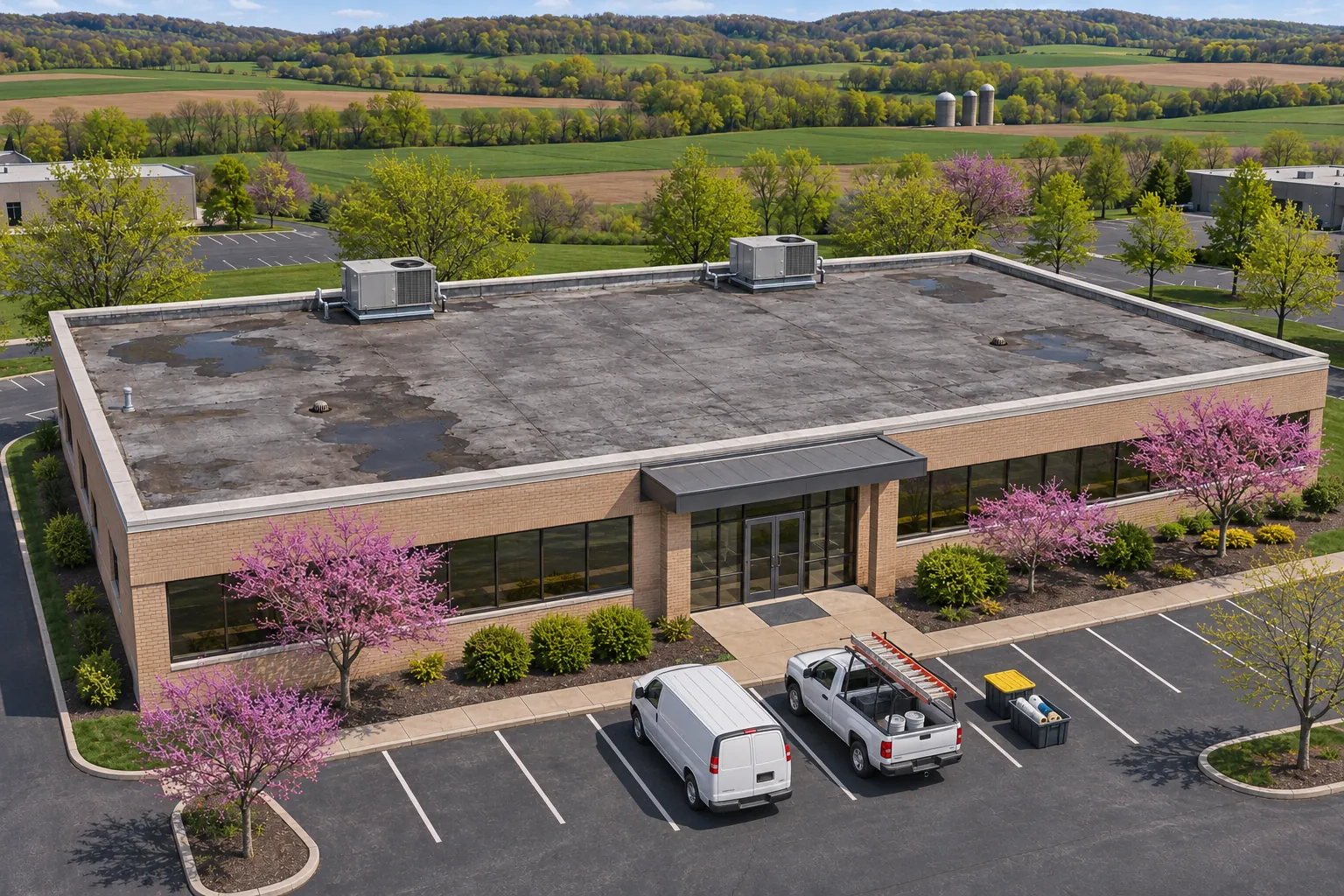
We record each stain, drip, and damp wall inside, with the weather and any equipment activity at the time it appeared.
On the roof we work upslope from the wet spots, checking seams, curbs, boots, and service openings along the likely path.
Condensate lines, pipe joints, and masonry get checked with the right trade, so a roof patch goes only where roof water enters.
The failed detail is repaired and any wet insulation along the path replaced, then the entry point is photographed for your file.
Once the entry point is found, the fix often falls under one of our other services.
Traces that end at a split seam, blister, or drain bowl lead to flat roof repair on the membrane.
When the path ends at a backed-out screw or a rusted lap, the repair moves to the metal panels themselves.
Leaks that trace to stacks, fans, or heavy equipment curbs on a plant roof are handled as industrial roof repair.
Units, thaws, leases, and cost questions about tracing a commercial roof leak.
Yes. Condensate can drip below a unit, so a nearby ceiling stain is a question before it is a roofing failure. We compare the leak with when the equipment runs and inspect the curb flashing and service openings. The equipment technician checks internal parts while we look at the weatherproof connections around them.
A thaw sends meltwater into details reached by blocked drainage or water held behind ice. Once safe access is available we inspect the warehouse gutters, outlets, and roof-to-wall connections. The repair targets the entry route and any wet materials along it, instead of the spot where water finally drips.
Most traces on a single building take one visit. Leaks tied to weather or equipment cycles can need a second look under the conditions that cause them, such as a thaw or a unit running, before the entry point is confirmed.
Hidden water travel and damage beyond the visible opening widen both the investigation and the repair. The price is set on the roof after we review the system, the size and number of damaged areas, wet insulation found by core cuts, flashing, drains, and access. That same visit decides between a repair and a section replacement.
Check the lease first. Maintenance, repair, and notice duties depend on the agreement between owner and tenant. We provide the roofing findings and the proposed repair for that discussion, while the responsible parties arrange access and protect affected contents.
List where the water has shown up and when. We will trace it back across the roof, repair the entry, and photograph what we fixed.