Owner
- One repair at the entry point instead of patches under each stain.
- Wet insulation replaced along the path the water took.
- A trace sketch showing where water entered and where it dropped.
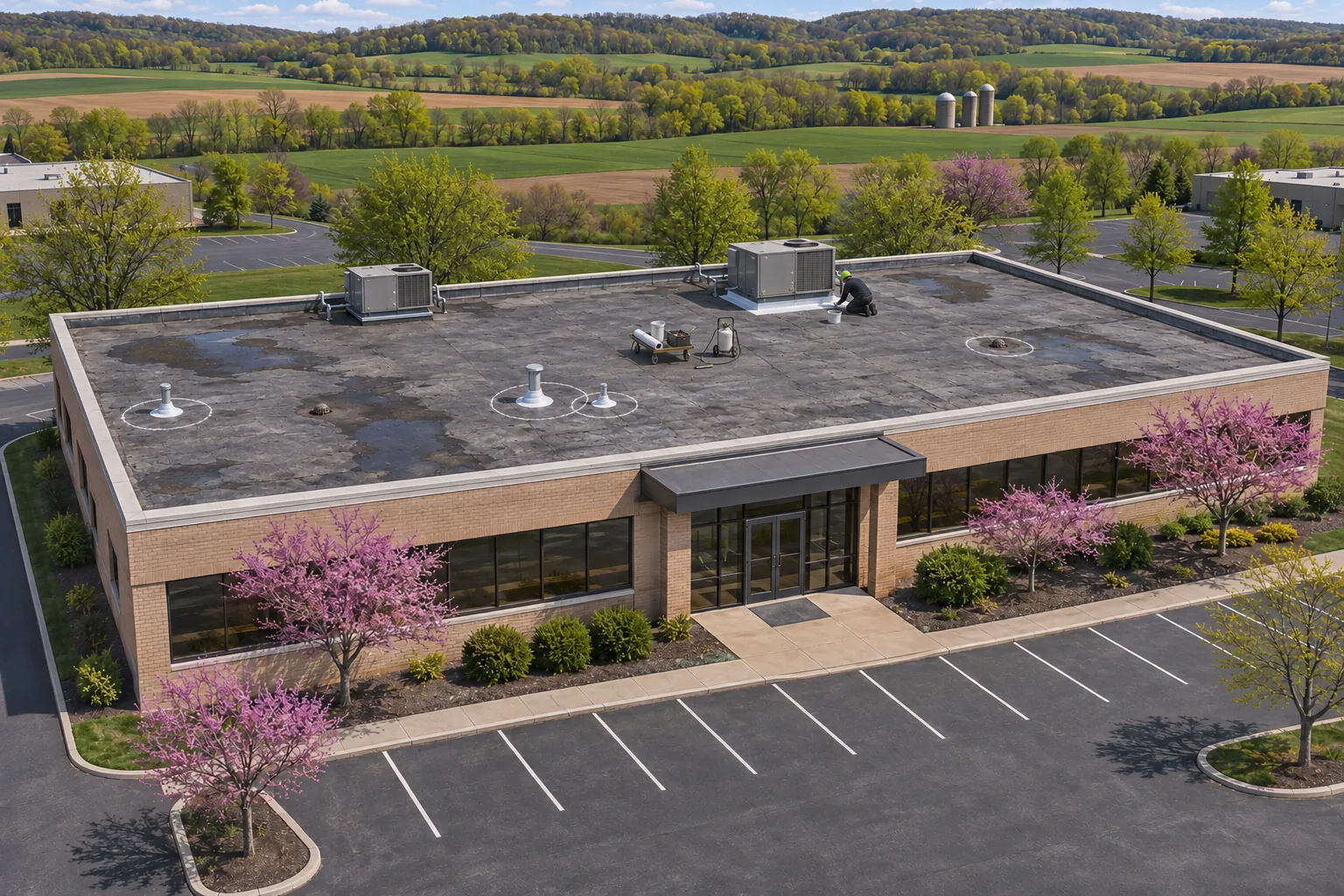
As an Ephrata commercial roof repair contractor, we trace warehouse leaks along the deck to the seam or penetration letting water in, then repair that detail and any wet insulation.
Ephrata commercial roof repair often starts in a warehouse, where water can cross several bays of deck before it shows on a ceiling panel.
In a tall building the drip and the entry point are rarely close together. Water that gets in at a seam, curb, or pipe boot runs along the flutes of the deck or through the insulation, then drops wherever a fastener or joint gives it a path.
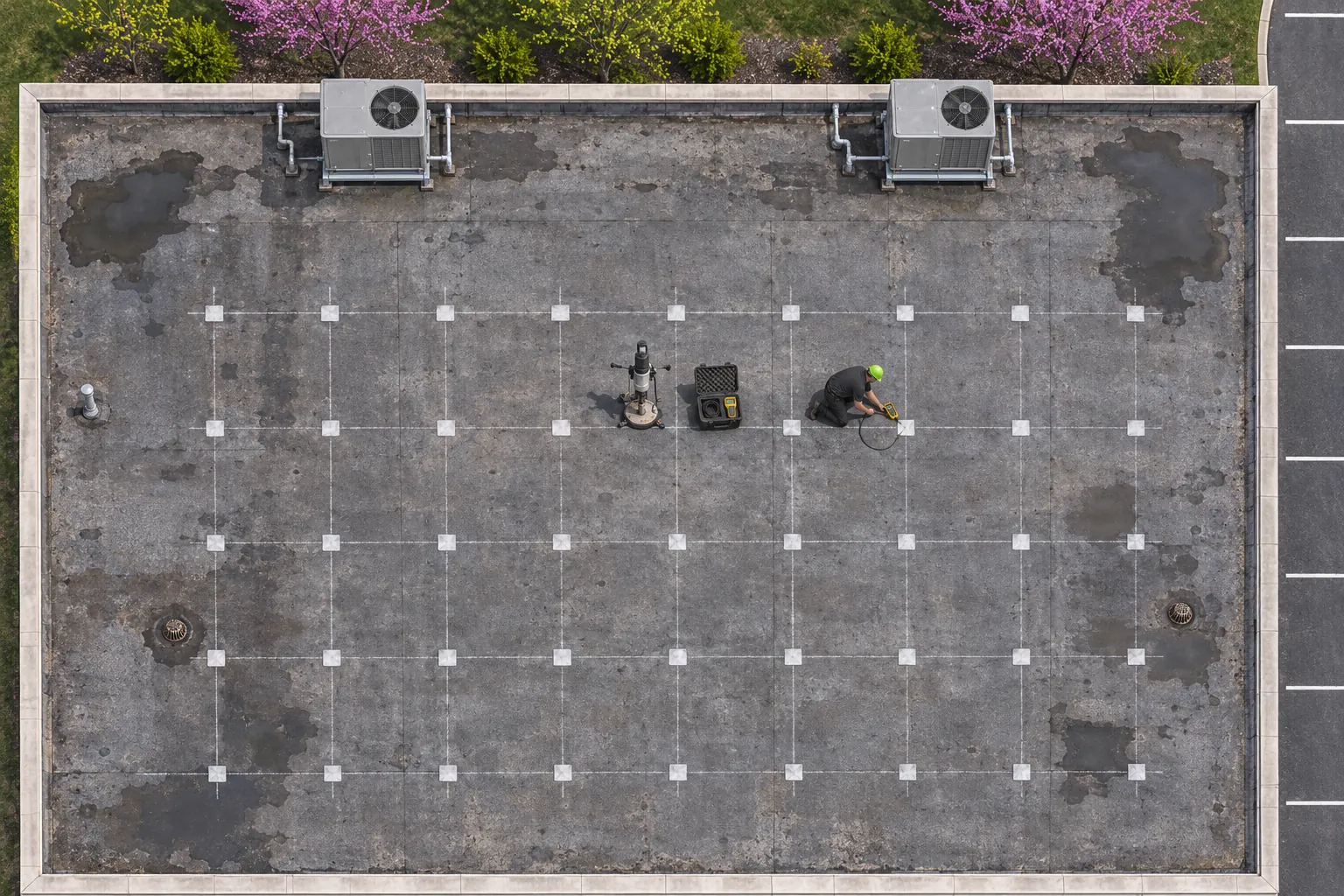
So the repair starts at the stain and works upslope, checking every opening along the way, with core cuts where the path crosses insulation.
Warehouse leaks show up far from their source. These pairs show the indoor sign and the roof detail most often behind it.
Ceiling panels darken mid-bay, with no unit or vent anywhere above them.
Water entered at a seam or penetration upslope and ran along the deck before dropping.
Drops fall in a line along a joist or beam, shifting a little with each storm.
Water is riding the underside of the deck or a joist from an opening some distance away.
Faced insulation bulges between purlins, heavier on one side of the building.
Saturated board or batts hold water from a long-running leak, and that wet material gets replaced along with the entry repair.
Pallets near the loading doors pick up water after wind-driven rain.
Flashing at the wall above the dock, or the roof edge over it, lets driven rain in sideways.
In a warehouse, finding the real entry point spares owners, managers, and floor staff from chasing the drip.
A warehouse trace covers more roof than the stain suggests. These are the details we check and why.
| Detail | Why It Matters | What We Do |
|---|---|---|
| Seams upslope of the stain | Water enters here and travels downslope along the deck | Probe and reweld any opened lap |
| Curbs and pipe boots | Roof openings are the most common entry points | Reseal or reflash the failed detail |
| Insulation along the path | Wet board keeps feeding drips after the entry is closed | Core, then replace the wet section |
| Wall flashing over docks | Wind-driven rain gets in sideways at the edge | Refasten and reseal the flashing |
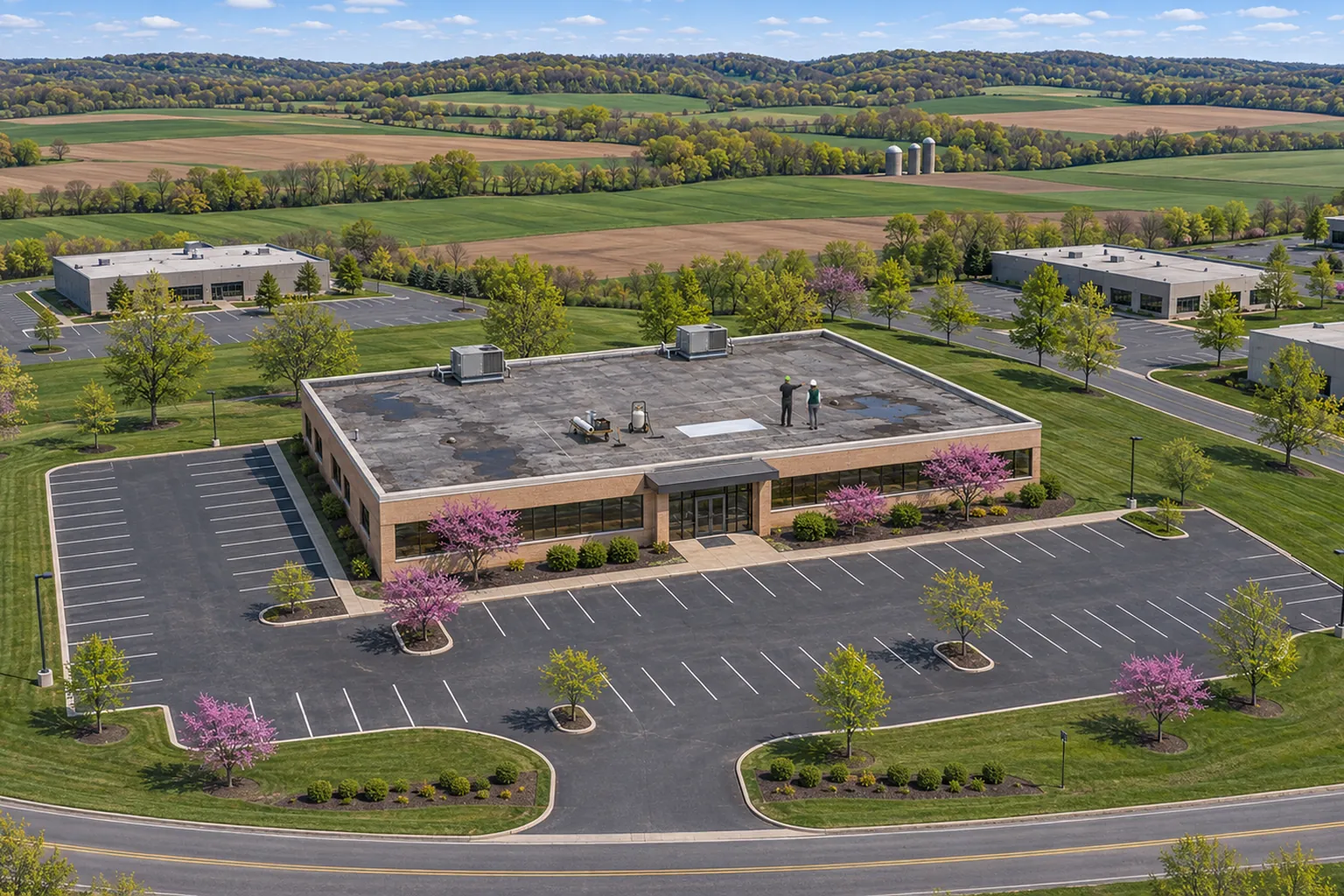
Send the address and mark where the panels are wet. We will trace the water back along the deck and price the repair at its entry.
Schedule Your Free InspectionA warehouse trace moves between the floor, the lift, and the roof, so each step sits in the lane where it happens.
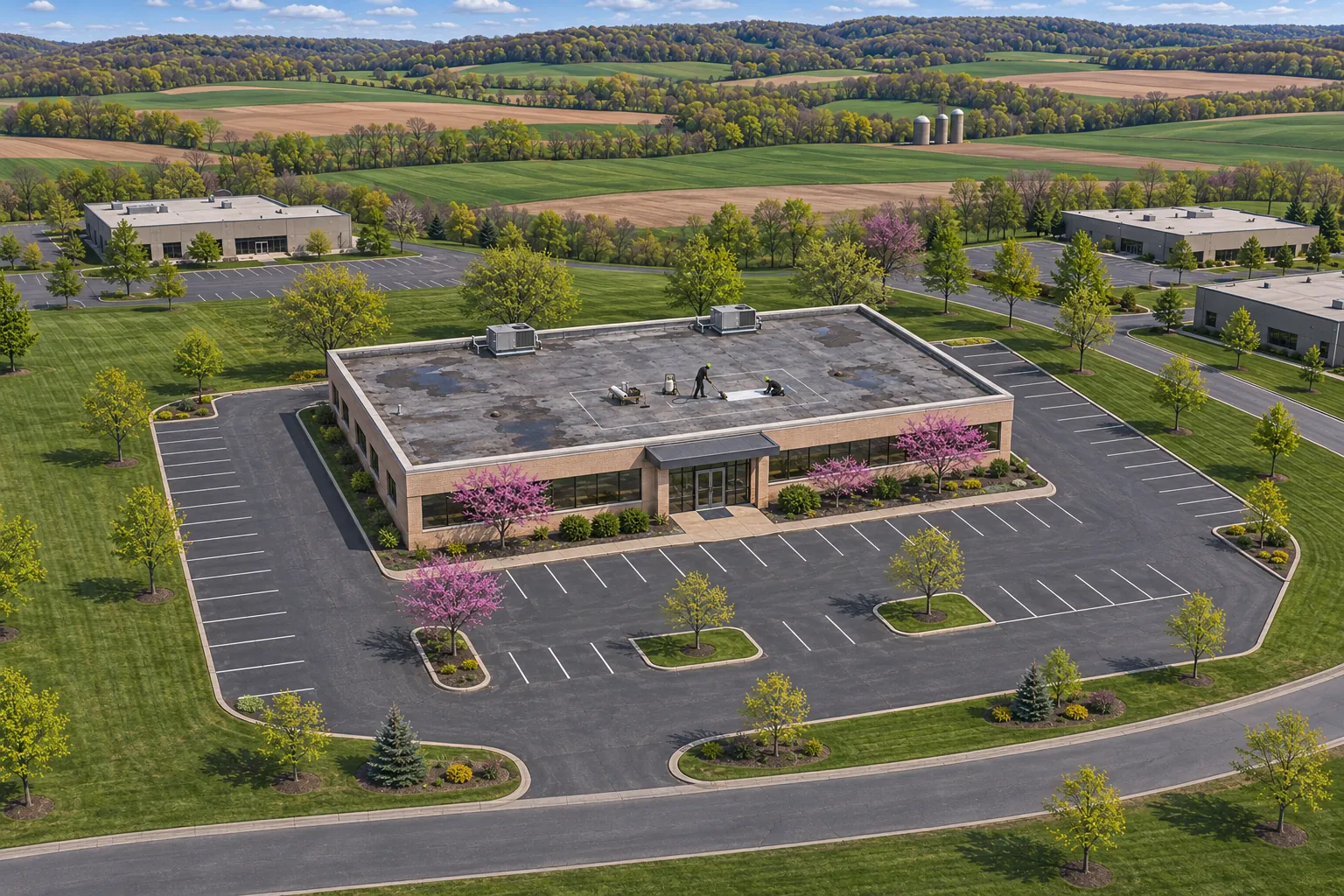
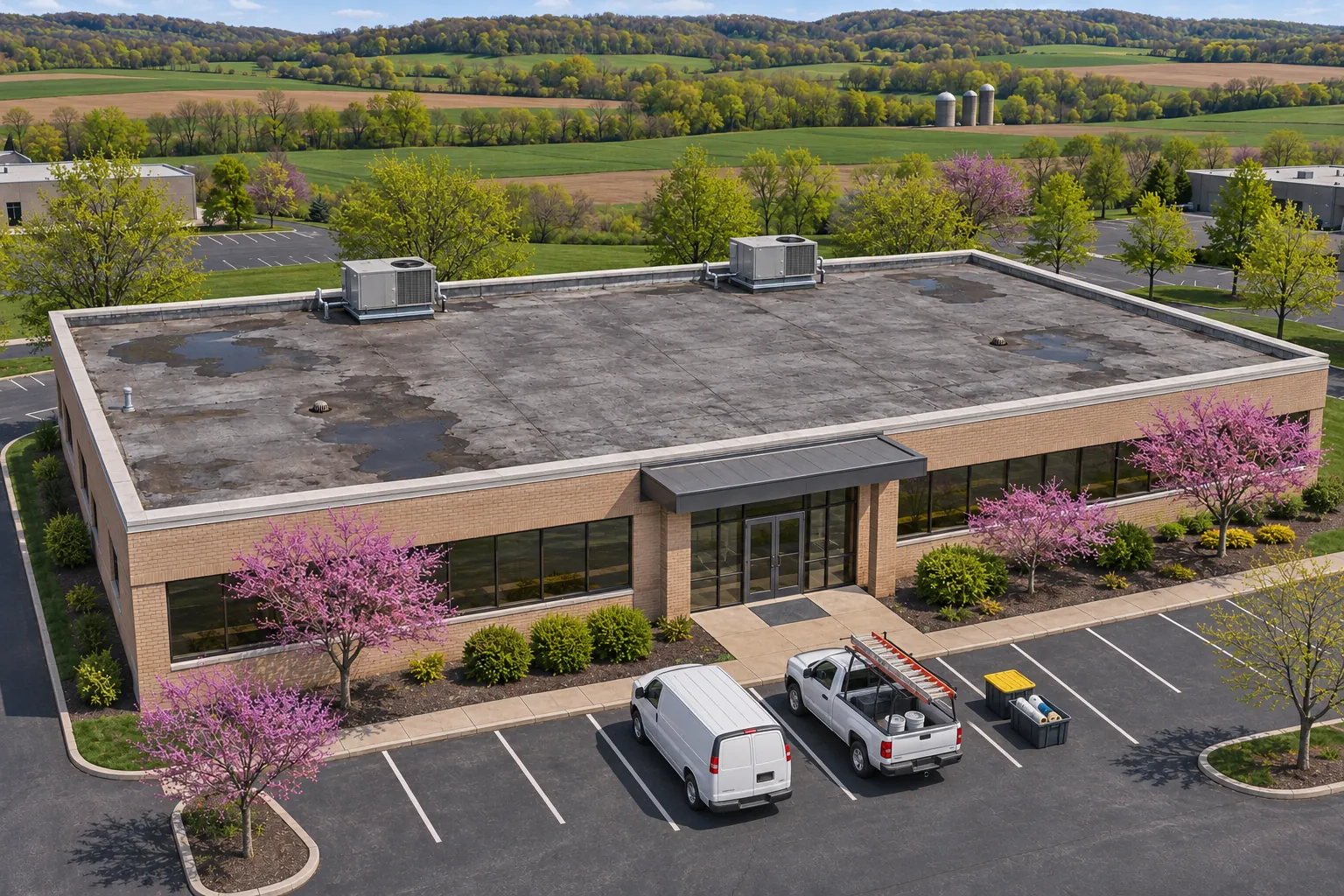
We mark every stained panel and drip on a floor plan, noting which bays get wet first in a storm.
From the stain line we walk upslope across the roof, checking each seam, curb, and boot the water could have crossed.
A lift or ladder lets us look at the deck underside along the path, where rust trails and water marks show the path.
The failed detail is repaired, wet insulation along the path replaced, and both ends of the trace photographed.
Ephrata is one of five towns we cover around Lancaster. For a building in none of them, call us or send us a message.
Metal roofs with rust hidden under panel overlaps.
Production floors protected before the roof is opened.
Snowmelt routes, iced outlets, and freeze-thaw seams.
Farm and equipment buildings with isolated panel defects.
Warehouse leaks, lifts, insulation, and scheduling questions from Ephrata owners.
Because water often travels through the roof before it reaches the panel. We compare the interior location with seams, penetrations, and drainage, then work toward the likely entry. A patch placed straight above the stain misses the source whenever water has moved along decking or insulation first.
Yes, wherever the cores find it wet. Soaked board keeps releasing water after the entry is closed and can corrode the deck beneath it. We replace the wet section along the path and leave dry board in place.
With a lift or tall ladder, yes. Looking at the deck underside along the suspected path shows rust trails and water marks that confirm the path before the roof is opened.
In most cases. Lifts and roof work get planned around dock schedules, and stock under any opening is covered or moved for the time that section is open.
The address, roof access details, and a list or photos of the places that get wet. Knowing which storms cause leaks, and which way the wind blew, helps narrow the trace.
Mark the wet panels and send the address. We will follow the water across the deck to its entry and price the repair from there.