Industrial Repair Fits
- Opened flashing at stacks, fans, or curbs
- Damage mapped to a few areas of the roof
- Dry insulation around the defects
- Deck that stays firm beside equipment
- Traffic damage along service routes

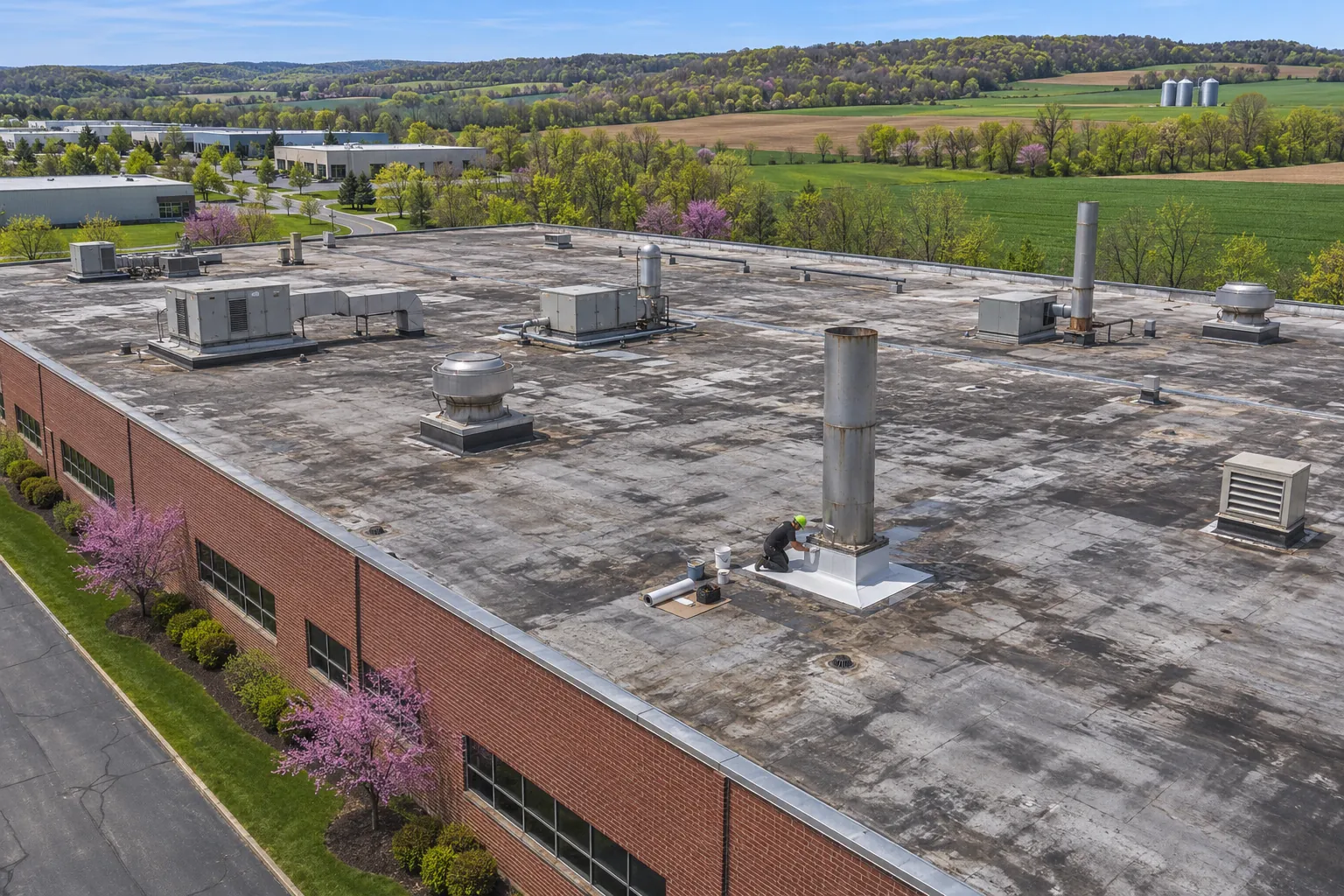
As a Lancaster industrial roof repair contractor, we repair flashing at stacks, fans, and equipment curbs on plant roofs, planned around production and the floor below.
Lancaster industrial roof repair suits plant roofs with defined trouble spots. Broad deterioration across the roof calls for a larger plan.
Plant roofs carry heat, vibration, and foot traffic. These pairs link what staff report on the floor with what we find above it.
Water lands near machinery under an exhaust stack or vent.
Stack flashing has cracked from heat and movement, letting water run down the outside of the stack.
Stains on the ceiling around an exhaust fan show grease or discoloration.
Exhaust residue has softened the membrane at the curb, and the flashing seal has opened.
Leaks follow a line between rooftop units that maintenance techs visit often.
Foot traffic has cut or crushed the membrane along the path between equipment.
Ceiling panels bow near a rooftop unit after storms.
Water at the curb has reached the deck, and corrosion or soft insulation lets the area settle.
Plant roof repairs fall into a few groups, each planned around the equipment and the floor beneath.
| Repair | When It Fits | Planned Around |
|---|---|---|
| Stack and vent reflash | Cracked or lifted flashing at stacks and vents | Hot work rules and process schedules |
| Fan and curb repair | Membrane softened or opened at exhaust curbs | Fan shutdown with maintenance staff |
| Walkway and traffic repair | Cuts and crushed areas along service paths | Technician access and walkway pads |
| Deck section repair | Rusted or soft deck under a leak | Containment over the production floor |
On a plant, a roof repair touches the owner, the maintenance team, and every shift working below.
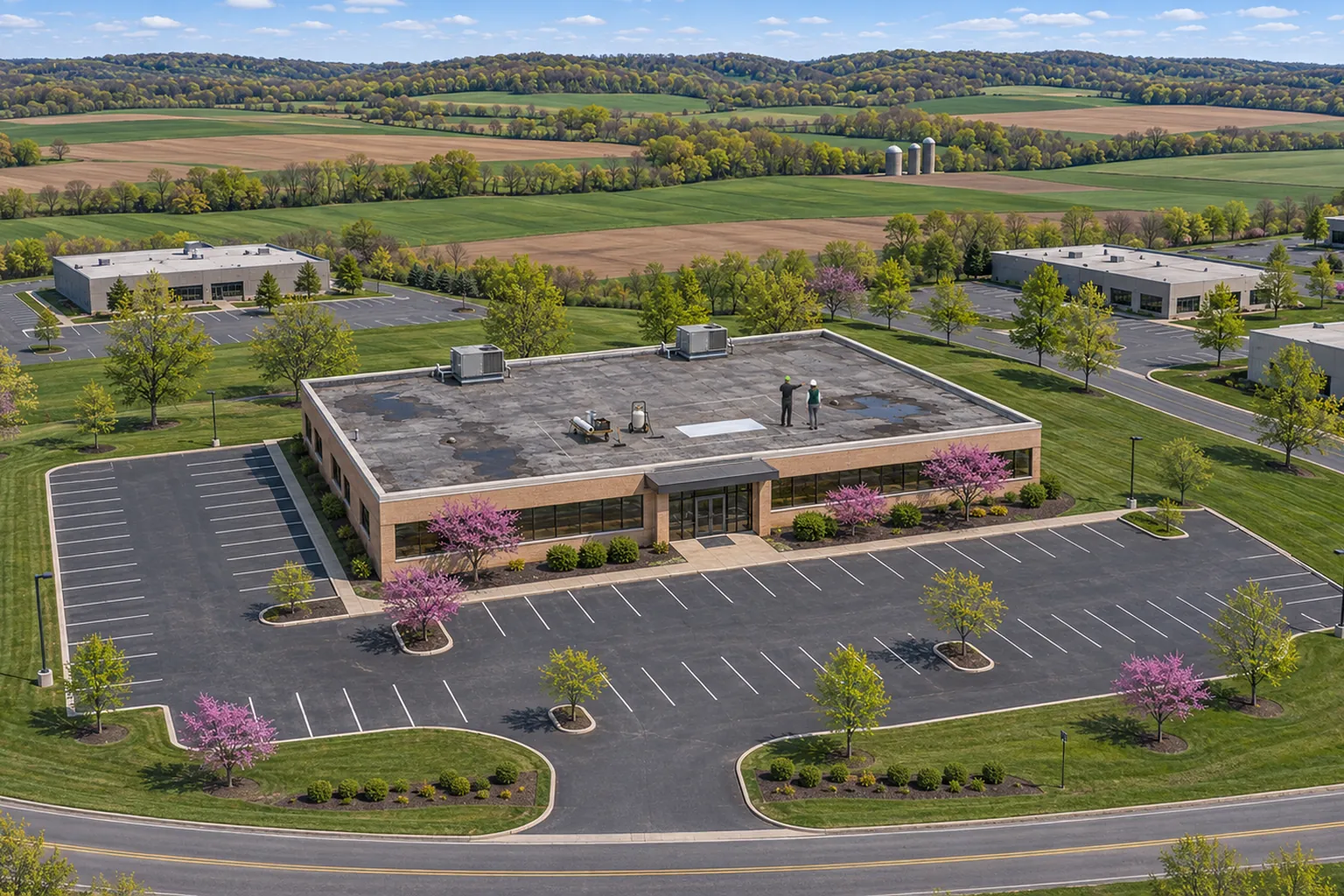
Send the address and the area that leaks. We will check the stacks, fans, and curbs above it and plan the repair around your shifts.
Get A Free EstimatePlant repairs need as much planning on the floor as on the roof, so each step sits in its own lane.
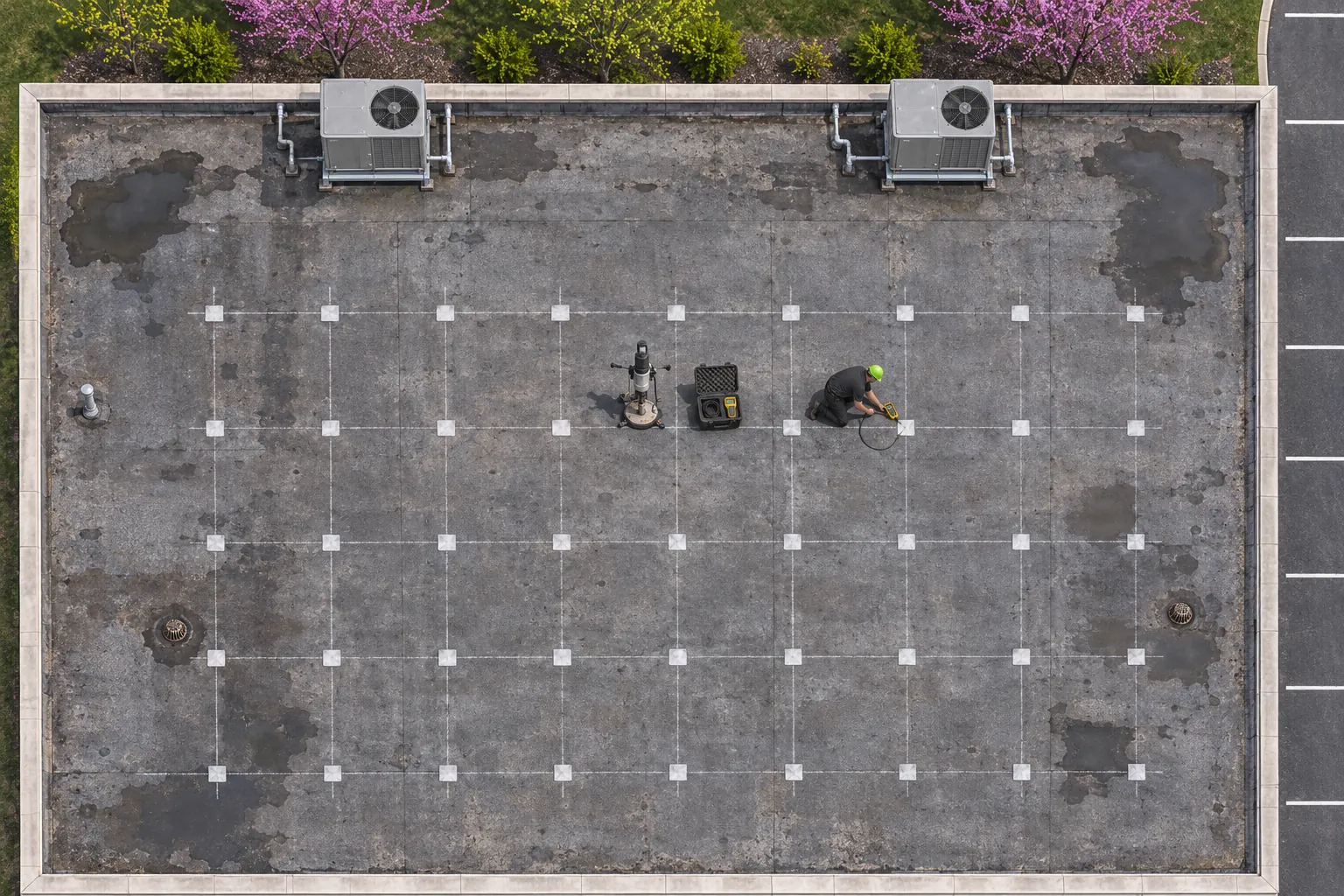
We meet the maintenance lead to note air intakes, sensitive equipment, shift times, and which fans can shut down.
Seams, equipment connections, and drainage get checked beyond the stain, and selective cores test areas where older repairs hide the condition.
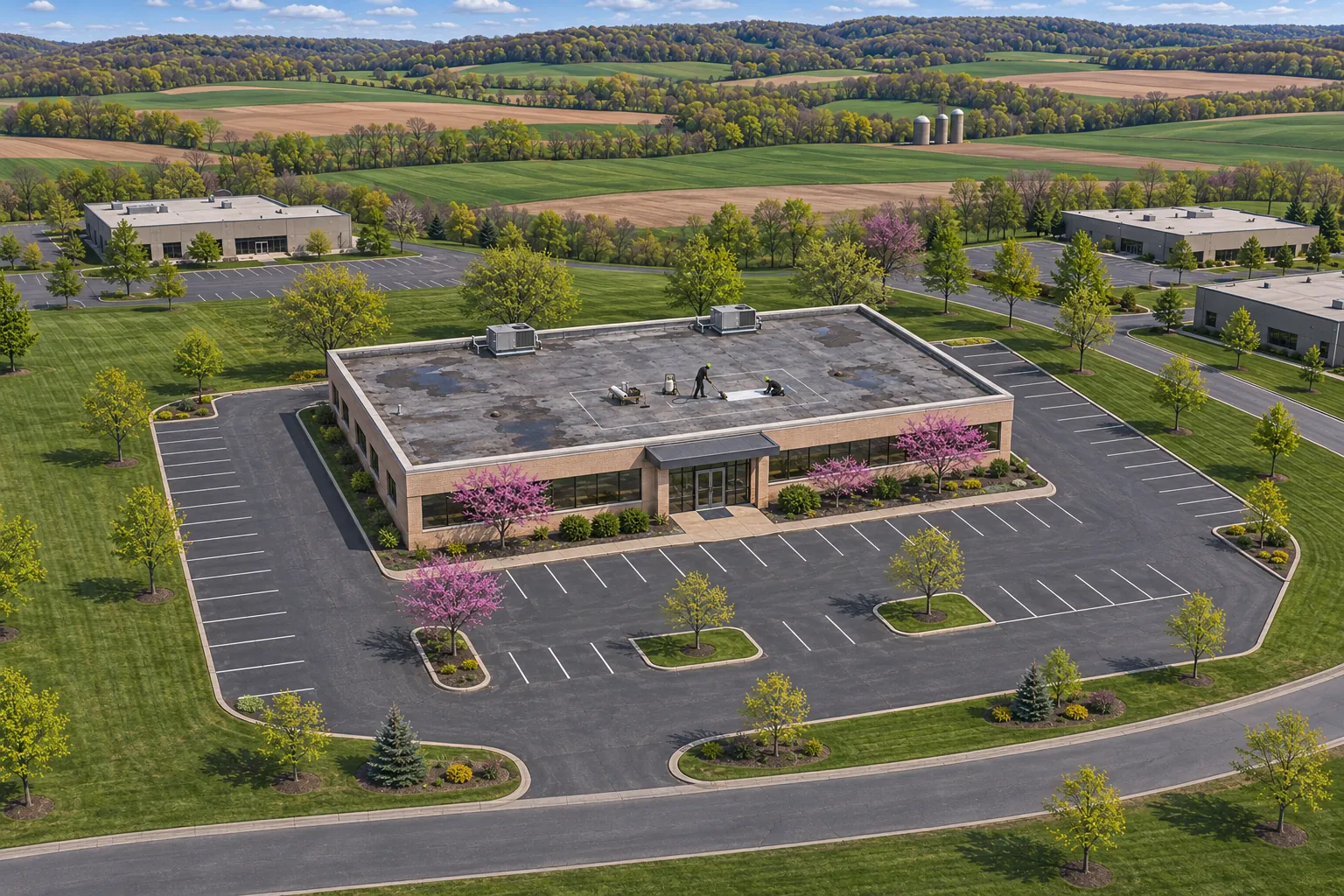
Containment and covers go over the production area under any opening, set to the schedule agreed with the plant.
Flashing, membrane, or deck is repaired, then the maintenance team gets photos and a list of curbs to watch on later roof walks.
Plant roofs often need more than one kind of repair.
Large low-slope plant roofs also get the seam, blister, and drain repairs covered by flat roof repair.
Metal warehouse and storage wings on the same property need panel and fastener work under metal roof repair.
If water shows up in an office or lab area with no equipment above it, leak repair traces the path first.
Inspections, upkeep, budgets, and processing plants.
Often. Mapping damage and moisture across the roof separates isolated defects from wider deterioration. We examine seams, equipment connections, and drainage beyond the interior stain. Some boundaries need selective cuts to confirm, especially where earlier repairs hide the condition underneath.
New damage, displaced seals, and drainage blockages near the repaired curbs. We compare those notes with equipment servicing and earlier roof photos. Later foot traffic or equipment movement can affect a repair, so any change gets checked on its own merits instead of being treated as the old leak returning.
Yes. Food and processing plants get the same repairs, with extra planning for containment, air intakes, and sanitation rules on the floor below. We agree on covers and work hours with the plant before any cutting starts.
Occupied areas change the access, staging, and protection a repair needs, and those costs sit alongside the roof work itself. The price is set on the roof from leak tracing, system type, the size and number of damaged areas, wet insulation found by core cuts, flashing, and drains. Where findings warrant it, we compare a local repair with section replacement.
Yes. The inspection map separates leaks that need work now from worn areas that can wait, so the urgent curbs, stacks, and seams get repaired first. The remaining areas are listed with photos and core results, which gives the next budget a clear starting point.
An explanation of the defect we found and how the repair can happen around operations. We review air intakes, sensitive equipment, and access above occupied areas along with the roof materials. The plan names any openings and interruptions up front, without assuming the floor below stays unrestricted.
Tell us which part of the plant leaks and when production runs. We will check the equipment flashing above it and plan the repair around your shifts.