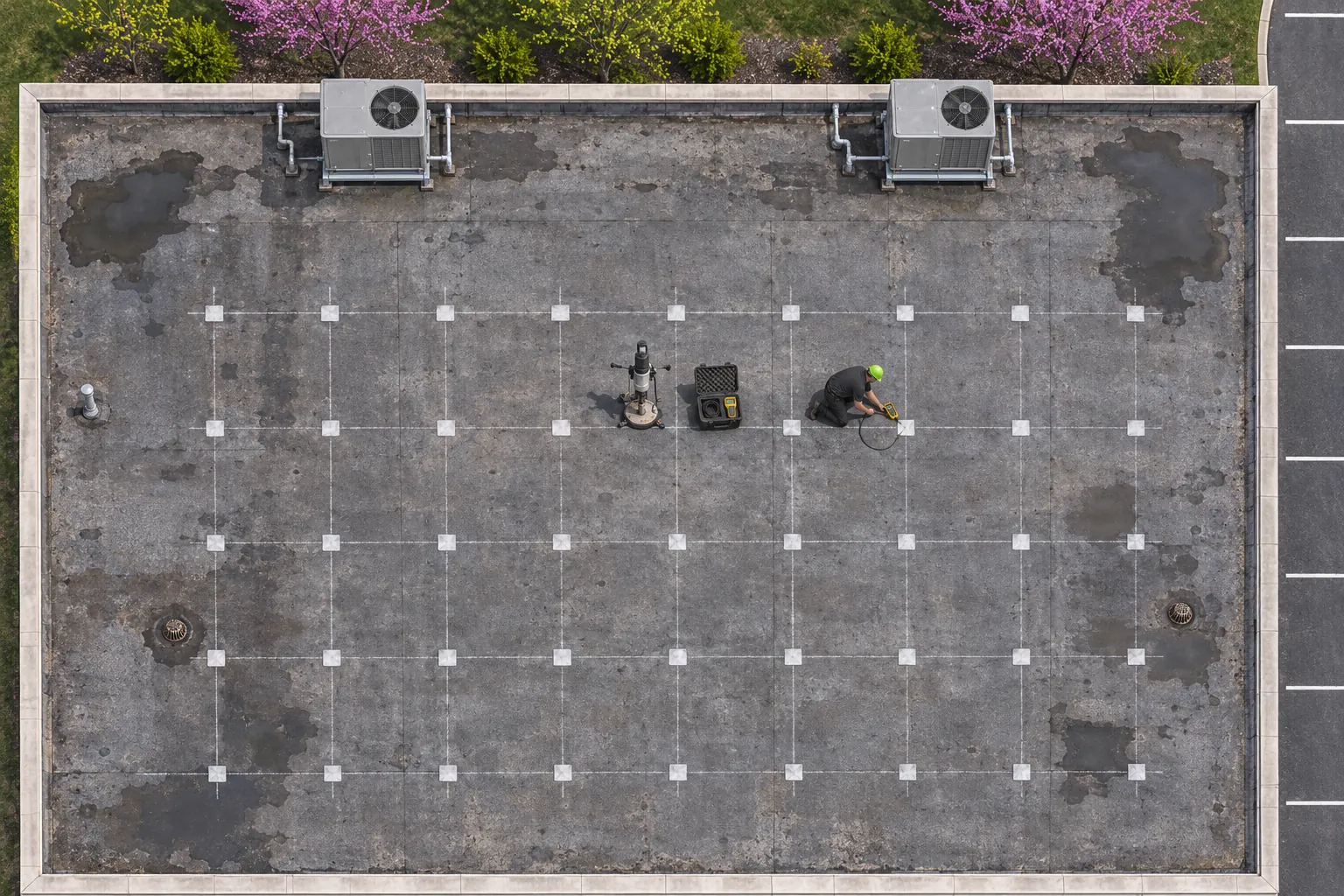
Top-down view of a marked core-cut grid on a flat roof with a roofer taking a core sample

Commercial Roof Repair Questions in Lancaster

Thirty Answers on Leaks, Repair Limits, and Planning

These commercial roof repair questions in Lancaster come from owners and facility managers deciding how far a repair should reach.

  • TopicsSeven groups of questions
  • FocusFinding the real entry point
  • PlacesLancaster and five towns
All Questions

Commercial Roof Repair Questions in Lancaster by Topic

Browse the commercial roof repair questions in Lancaster by topic, or jump straight to the group closest to what your roof is doing.

Questions

Deciding How Far a Lancaster Roof Repair Reaches

Wet insulation, leases, tie-ins, and inspection records shape the size of a repair.

Does widespread wet insulation rule out another small roof patch?

Widespread wet insulation means the repair scope needs to extend beyond a small surface patch. We investigate the moisture boundary and condition of the deck before comparing repairs with replacement. The appropriate extent depends on what remains serviceable, rather than the size of the opening first noticed from outside.
Who should authorize repairs on a leased Lancaster commercial building?

Authorization should follow the lease terms and the arrangements between the owner and tenant. For a Lancaster, PA building, we can document the defect, proposed work and access requirements so those obligations can be checked. Payment and maintenance responsibilities should not be assumed simply because one party occupies or owns the property.

Can sound roofing remain beside a section needing replacement?

Sound roofing can remain beside a replacement section when investigation establishes a compatible, reliable connection boundary. We check for moisture extending into adjoining insulation and for details that complicate the transition. Keeping the surrounding covering is appropriate only when the proposed tie-in does not leave deteriorated materials immediately beneath or beside it.

What should an inspection explain before commercial roof repairs begin?

An inspection should explain the likely entry path, affected components and evidence supporting the proposed repair limits. We compare the roof findings with interior stains and operating conditions, then identify any areas needing further testing. That record helps the owner understand why the work can extend beyond the visible leak.

Questions

Patches, Drains, and Materials on Flat Roofs

Lifting patches, drain connections, and unknown membranes come up on most low-slope roofs.

Is a fresh patch sensible over an older patch that keeps lifting?

A lifting patch needs its bond and underlying material investigated before another layer is added. We identify the roof system and check for moisture or movement around the repair. Repeating the same surface treatment over unstable material can preserve the failure, making removal or section replacement a more appropriate option.

How do roof drain repairs differ from repairs to the pipe below?

Roof drain repairs address the connection between the roofing and outlet, while pipe faults below can require plumbing work. We investigate both where water appears near a drain. The work should be coordinated before opening the roof so a repaired membrane never sits over an unresolved leak in the connection underneath.

Why does a flat roof repair need an on-roof price assessment?

An on-roof inspection sets the price because the visible leak hides part of the repair scope. We assess leak tracing, roof system, damaged area sizes and number, wet insulation through core cuts, flashing, drains and access. Those findings establish whether repair or replacement of the affected section is the right approach.

Which repair material should be used on an unidentified flat roof?

The roof material should be identified before a repair product is selected. We check the existing membrane, previous patches and the condition of the substrate so the chosen detail is compatible. A general-purpose surface application can create adhesion or maintenance problems if its suitability for the actual roof has not been established.

Questions

Panels, Seams, and Remaining Life on Metal Roofs

Rust under overlaps and seams that keep separating decide how much metal gets replaced.

Can corrosion beneath panel overlaps require replacing more than one sheet?

Corrosion beneath overlaps can extend into adjoining panels, so more than the visibly damaged sheet can need replacement. We examine metal thickness, fastening and the receiving seam before defining the work. The replacement must connect to serviceable material; stopping at an arbitrary panel edge can leave the next weak joint in place.

What should be corrected when a metal roof seam repeatedly separates?

Repeated seam separation needs the panel engagement, fastening and movement conditions checked before another repair is selected. We examine old sealing materials and the way the joint was assembled. The new detail should suit that metal roof system rather than simply restrain a connection that is intended to accommodate movement.

Are isolated metal roof defects repairable on farm equipment buildings?

Isolated defects on farm equipment buildings can be repairable when the surrounding metal and supports remain solid. We inspect the panel underside where possible and check neighboring connections for related damage. Local work should address the entire defect, including attachment or flashing problems that could otherwise reopen the same water path.

What limits the remaining life of a repaired metal roof?

Remaining metal roof life is limited by the condition of panels, supports and connections beyond the completed repair. We assess corrosion, drainage and recurring movement before describing what further maintenance may be needed. A successful local repair does not establish how long unrelated parts of the assembly will remain serviceable.

Questions

Tracing Leaks to Units, Thaws, and Lease Terms

Water moves before it drips, so the trace looks at equipment, weather, and who handles what.

Can water below a rooftop unit come from condensate drainage?

Condensate drainage can contribute water beneath a rooftop unit, so a nearby ceiling stain is not automatically a roofing failure. We compare leakage with equipment operation and inspect curb flashing and service openings. The equipment technician may need to check internal components while we evaluate the surrounding weatherproof connections.

What can increase the cost of tracing a roof leak?

Hidden water travel and damage beyond the apparent opening can increase the investigation and repair scope. An on-roof inspection sets the price after we review the system, damaged area sizes and number, wet insulation through core cuts, flashing, drains and access. The assessment also determines whether a repair or section replacement is appropriate.

Should a commercial tenant assume the owner handles every roof leak?

A tenant should check the lease rather than assume the owner handles every roof leak. Maintenance, repair and notification duties can depend on the agreement. We can provide the roofing findings and proposed work for that discussion, while access and protection of affected contents are coordinated by the responsible parties.

Why would a tobacco warehouse roof leak only during a thaw?

A thaw can send meltwater into details reached by blocked drainage or water held behind ice. We inspect the tobacco warehouse’s gutters, outlets and roof-to-wall connections after safe access is available. The resulting repair should address the entry route and any wet materials, not merely the place where water finally drips.

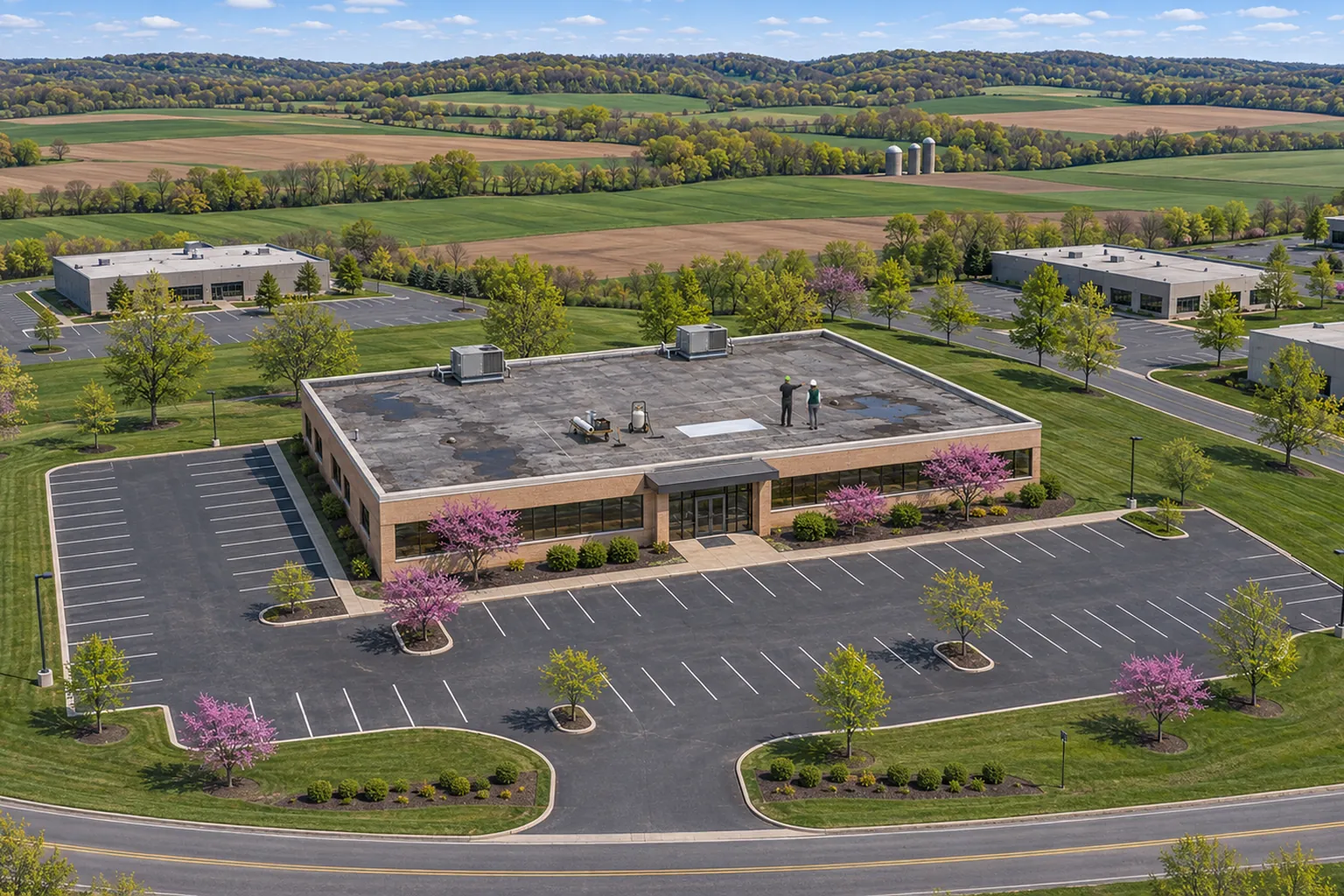
Brick office building with a flat roof and a parking lot beside open farm fields

Question That Needs a Look at Your Roof?

Most answers end with what the inspection finds. Send the address and we will set a time to look at the roof itself.

Get A Free Estimate
Questions

Plant Roofs, Curbs, and Production Areas

Maintenance staff, mapping, budgets, and processing schedules all shape plant roof repairs.

What should maintenance staff watch near repaired factory roof curbs?

Maintenance staff should watch for new damage, displaced seals and drainage obstructions near repaired curbs. We compare those observations with equipment servicing and previous roof photographs. A repair can be affected by later traffic or mechanical movement, so changes should be investigated rather than treated automatically as a repeat of the original leak.

Can an industrial inspection distinguish local damage from a larger roof problem?

An industrial inspection can help distinguish isolated defects from broader deterioration by mapping damage and moisture evidence across the assembly. We examine seams, equipment connections and drainage beyond the interior stain. Some boundaries need selective investigation before they can be confirmed, particularly where earlier repairs conceal the condition underneath.

How should an industrial repair budget account for occupied production areas?

Occupied production areas can change access, staging and protection needed for a repair. We set the price through an on-roof inspection of leak tracing, system type, damaged area sizes and number, wet insulation identified by core cuts, flashing and drain work. The scope must compare local repair with section replacement where the findings warrant it.

What should a processing plant expect from a roof repair assessment?

A processing plant should expect an explanation of the diagnosed defect and how repairs can be performed around its operations. We review intake locations, sensitive equipment and access above occupied areas alongside the roof materials. The resulting plan should identify openings and interruptions rather than presume the production floor can remain unrestricted.

Questions

Freeze-Thaw, Hail, Masonry, and Code Review

Pennsylvania winters, storms, brick walls, and permit review each change a repair plan.

How can freeze-thaw movement affect an existing roof repair?

Freeze-thaw movement can expose weakness at a repaired seam or flashing if water reaches the joint. We inspect snowmelt routes and ice at drains or gutters to understand the renewed leakage. Heavy wet snow presents separate loading concerns, which need qualified evaluation rather than a conclusion based on the appearance of the repair.

Are hail dents enough to define commercial roof repair work?

Hail dents alone are not enough to define repairs; the roof needs inspection for punctures, opened seams and impaired details. We also check damage from summer wind and distinguish older defects where possible. Coverage depends on the insurance policy and cause of loss, so documentation supports the scope without promising payment.

Could moisture inside a brick warehouse originate above the roof flashing?

Moisture can enter through masonry or coping above roof flashing and appear inside a brick warehouse. We inspect those paths alongside humidity and possible condensation beneath the roof. Patching a sound membrane leaves water descending behind it uncorrected, so diagnosis should establish the source before selecting the repair trade or material.

Can small roof repairs still require protecting a production floor?

Small roof repairs can require interior protection when opening the assembly exposes production equipment or materials below. We discuss debris, temporary containment and the operating schedule before work begins. The size of the visible defect does not determine the consequences of removing wet insulation or damaged decking over sensitive areas.

What should Lancaster repair plans explain to the code authority?

Lancaster, PA repair plans should explain the affected roof components and how much material could be removed or replaced. Pennsylvania’s UCC supplies the statewide framework. We would distinguish local covering repairs from work involving damaged supports so the authority can review the actual scope before the repair sequence is settled.

Questions

Repair Questions From Our Five Nearby Towns

Ephrata, Columbia, Lititz, Millersville, and Mount Joy each bring a roof question of their own.

Why trace an Ephrata warehouse leak beyond the wet ceiling panel?

Water can travel through an Ephrata warehouse roof before reaching the wet ceiling panel. We compare the interior location with seams, penetrations and drainage, then investigate the likely entry path. A patch directly above the stain can miss the source if the water has moved along decking or insulation first.

Can a Columbia metal roof repair reuse undamaged adjoining panels?

Undamaged panels on a Columbia metal roof can remain if the repair can connect securely to their seams and supports. We inspect neighboring metal and attachment points before deciding the replacement limits. Retaining panels should follow their condition, rather than a desire to minimize removal where hidden corrosion continues beneath overlaps.

What can make a Lititz drain leak return after patching?

A Lititz drain leak can return if the original fault was in the outlet connection or plumbing rather than the patched surface. We check the bowl, clamping area and pipework, as well as blocked drainage. The new scope should correct the identified component instead of repeating a treatment that did not address it.

Should Millersville fan servicing and roof repairs be coordinated?

Fan servicing and roof repairs in Millersville should be coordinated where equipment movement or exhaust affects the curb flashing. We review the roof detail with the equipment work so preparation and reassembly fit together. Otherwise, a completed patch could be disturbed or exposed again to the condition that contributed to the leak.

How should a Mount Joy facility document a leak after repairs?

A Mount Joy facility should record where water returns, the weather and any equipment activity around that time. We compare those observations with the earlier repair boundary and photographs. The evidence helps distinguish water using the original entry path from a separate defect or moisture source elsewhere in the building.

Ask Us Your Commercial Roof Repair Questions in Lancaster

Call with the question your roof is raising, or send the form. We will answer it from the roof once we have looked.

Call Us (610) 984-0530